
Provenance
Robert Rogers, Halifax
Gene Davis was a major figure in 20th-century American painting whose contribution was invaluable in establishing Washington, D.C., as a center of contemporary art. Davis also played a significant national and international role in the color abstraction movement that first achieved prominence in the 1960s.
Born in Washington, D.C., Davis attended local schools and later worked as a sportswriter and White House correspondent before pursuing a career in art. Although never formally trained, Davis educated himself through assiduous visits to New York’s museums and galleries as well as to Washington’s art institutions, especially the Phillips Collection. He also benefited from the guidance of his friend Jacob Kainen, an artist and art curator.
In the 1960s, art critics identified Davis as a leader of the Washington Color School, a loosely connected group of Washington painters who created abstract compositions in acrylic colors on unprimed canvas. Their work exemplified what the critic Barbara Rose defined as the ‘primacy of color’ in abstract painting.
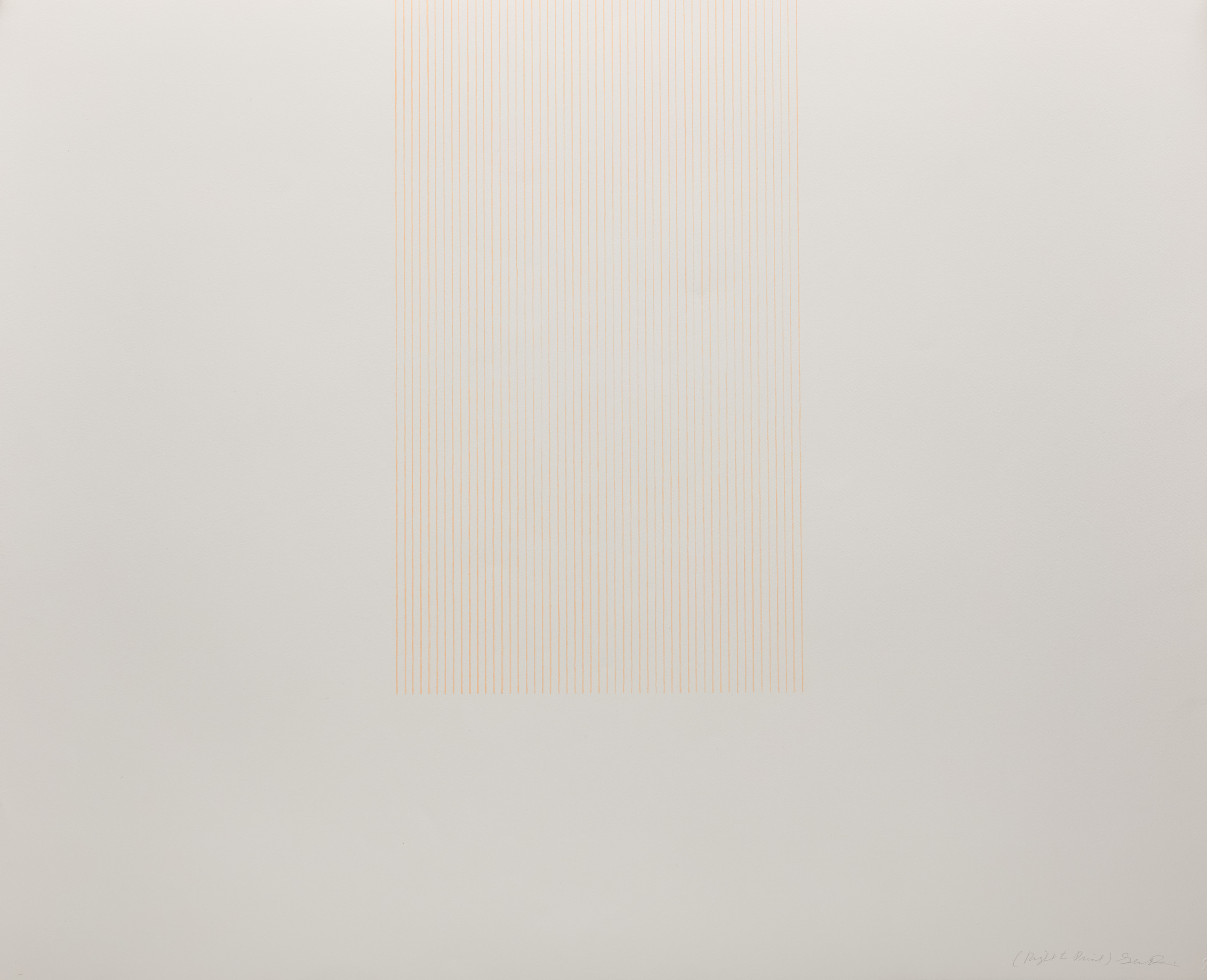
Although Davis’s work from the 1960s—mostly hard-edged, equal-width stripe paintings—is generally viewed in the context of the Washington Color School, his goal differed significantly from the other Color School practitioners. Artists like Morris Louis and Kenneth Noland generally preferred what Noland called ‘oneshot’ compositions, mostly symmetrical images that could be comprehended at a glance.