
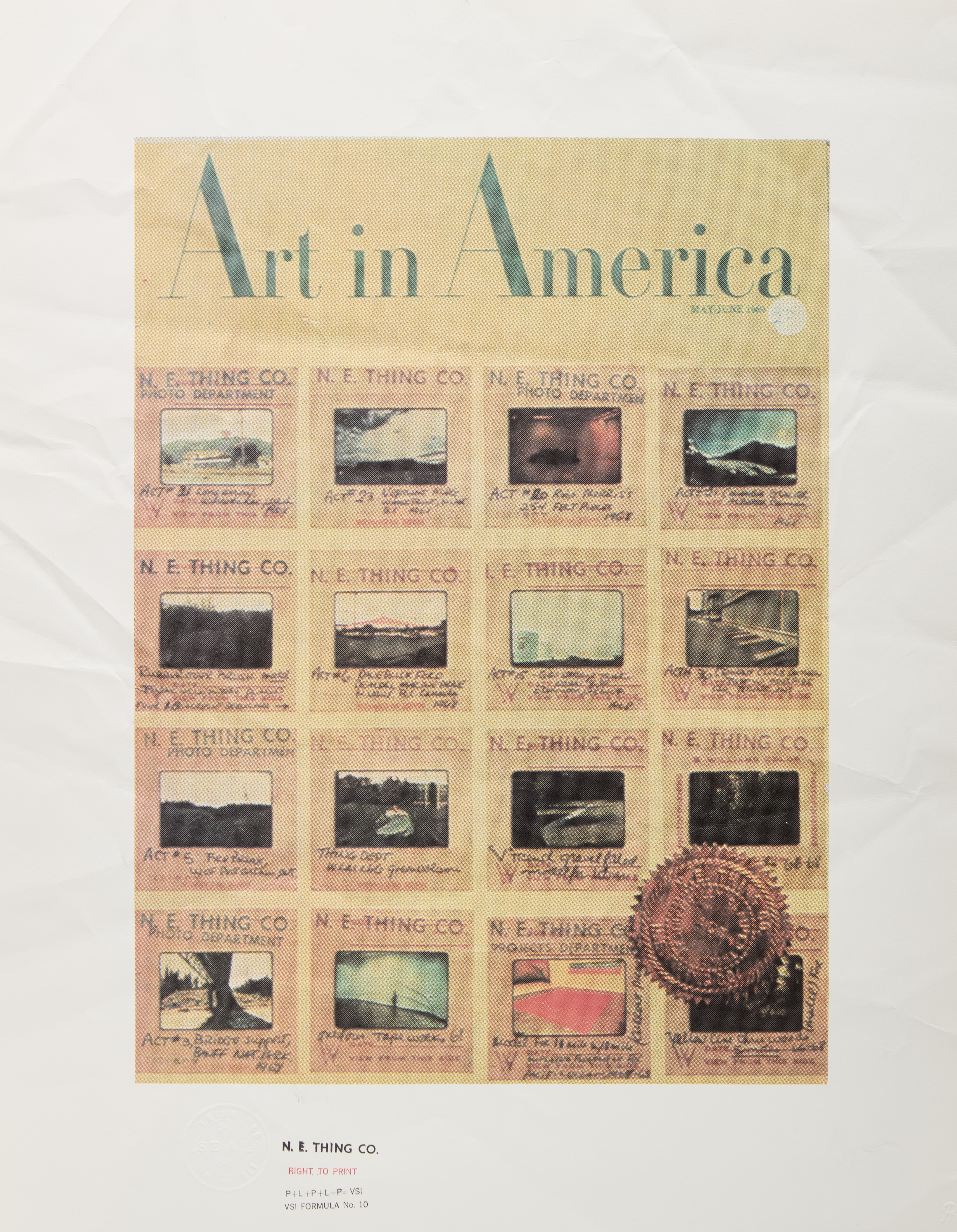
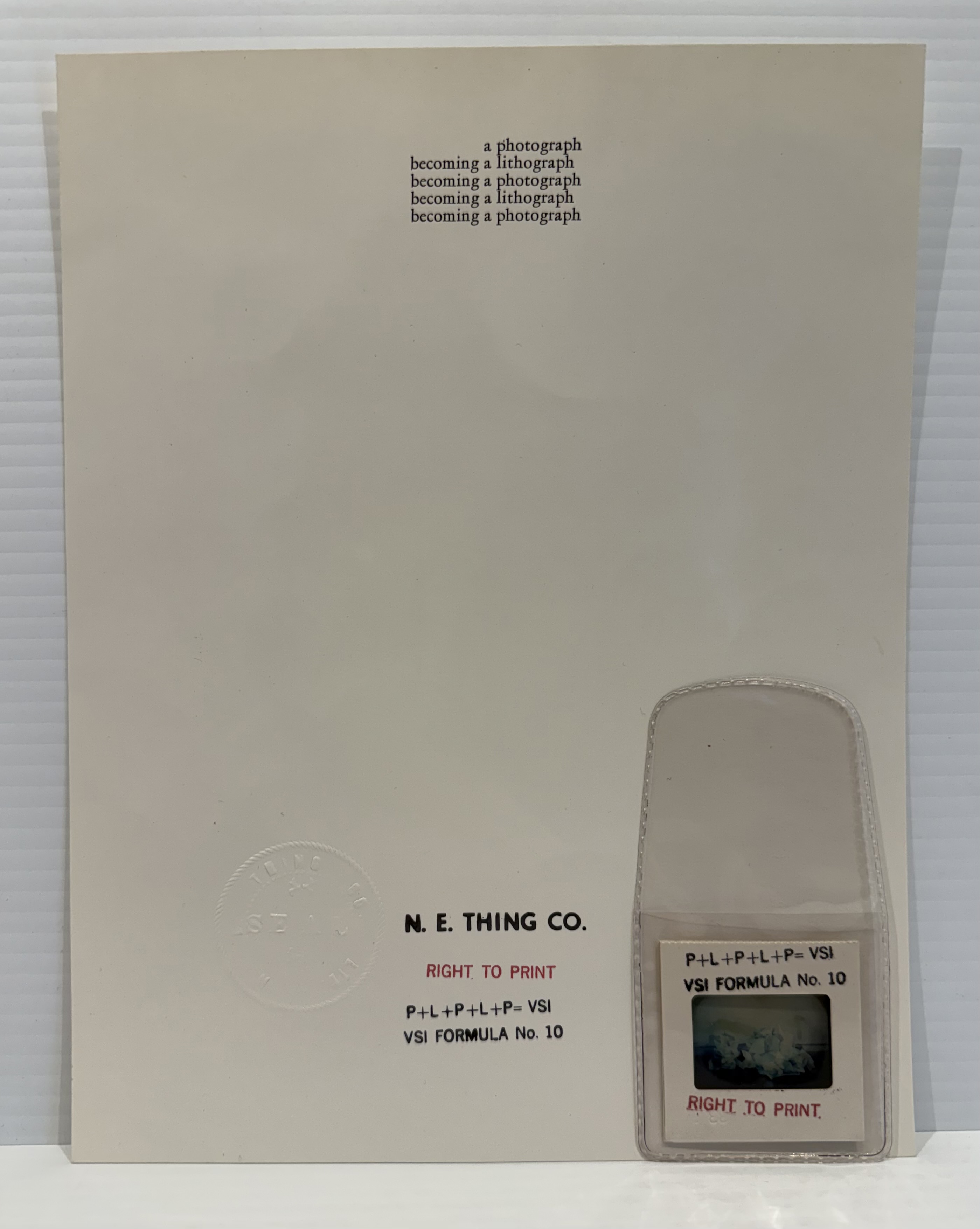
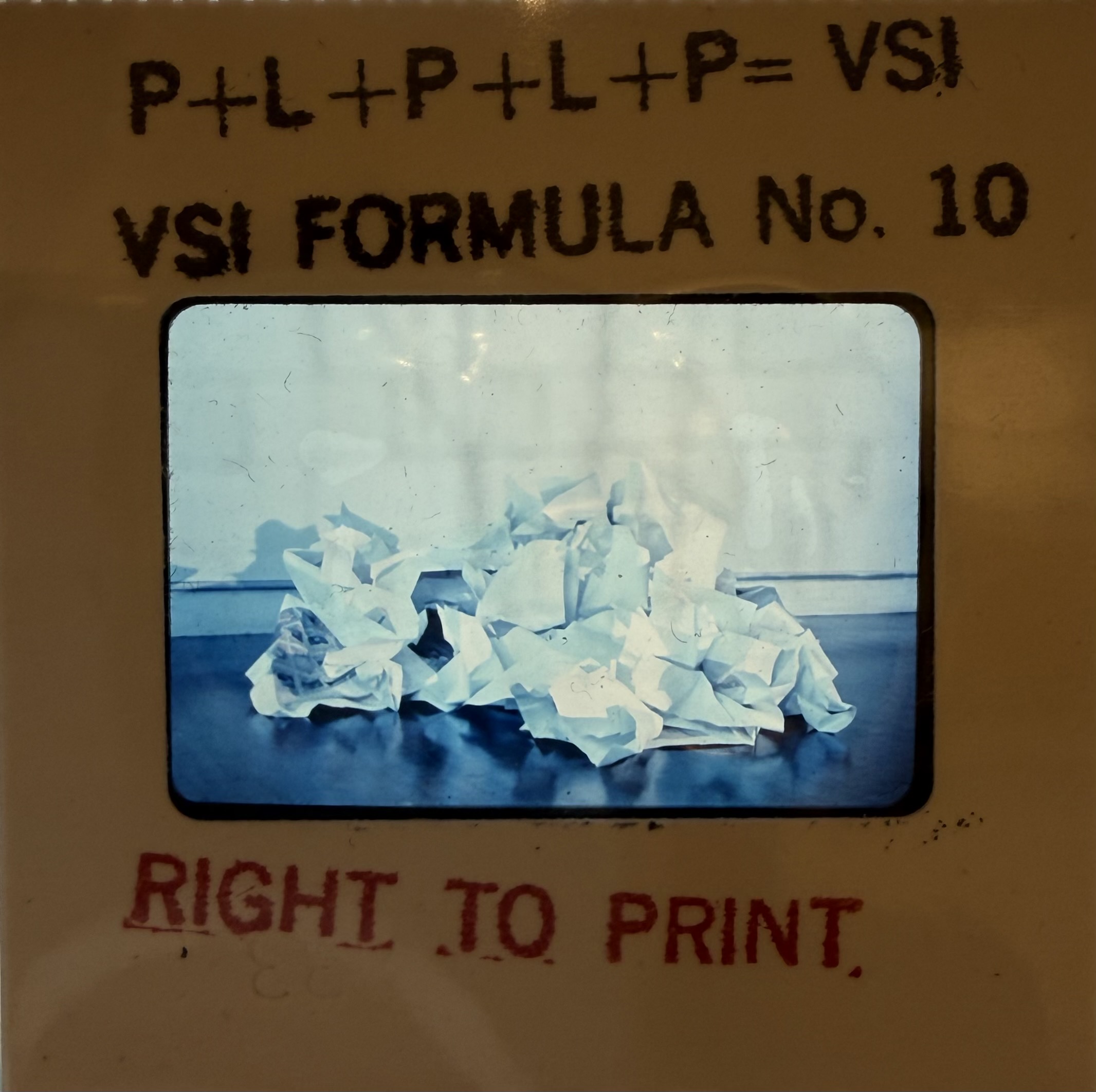
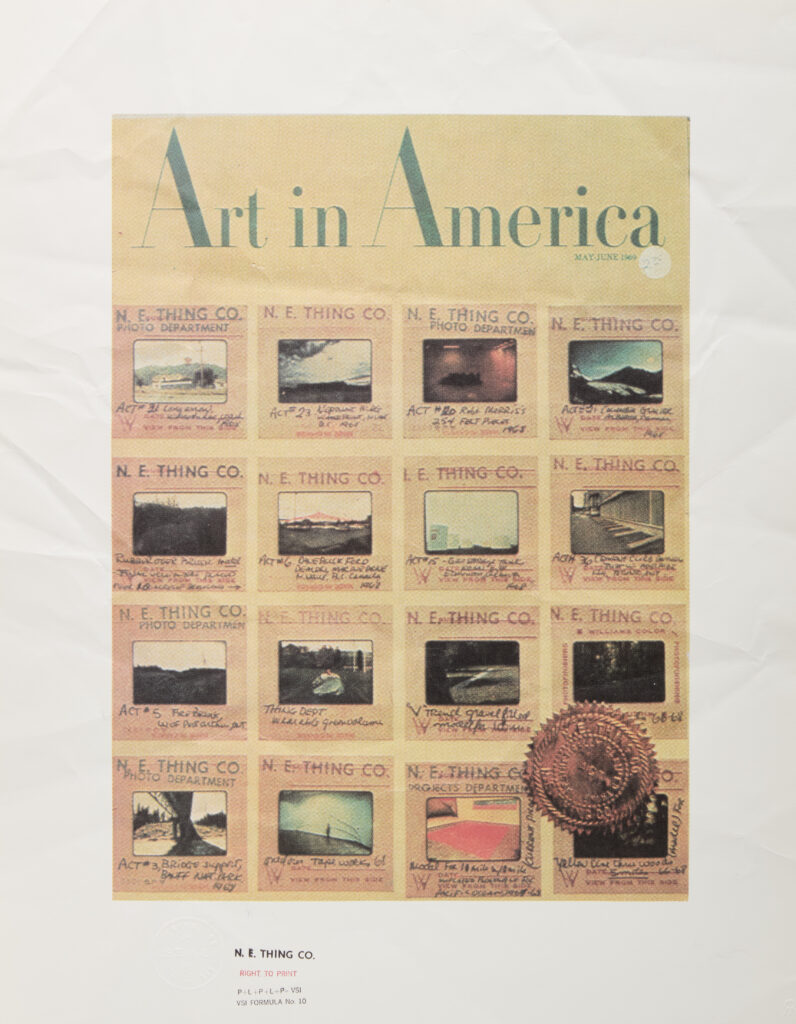
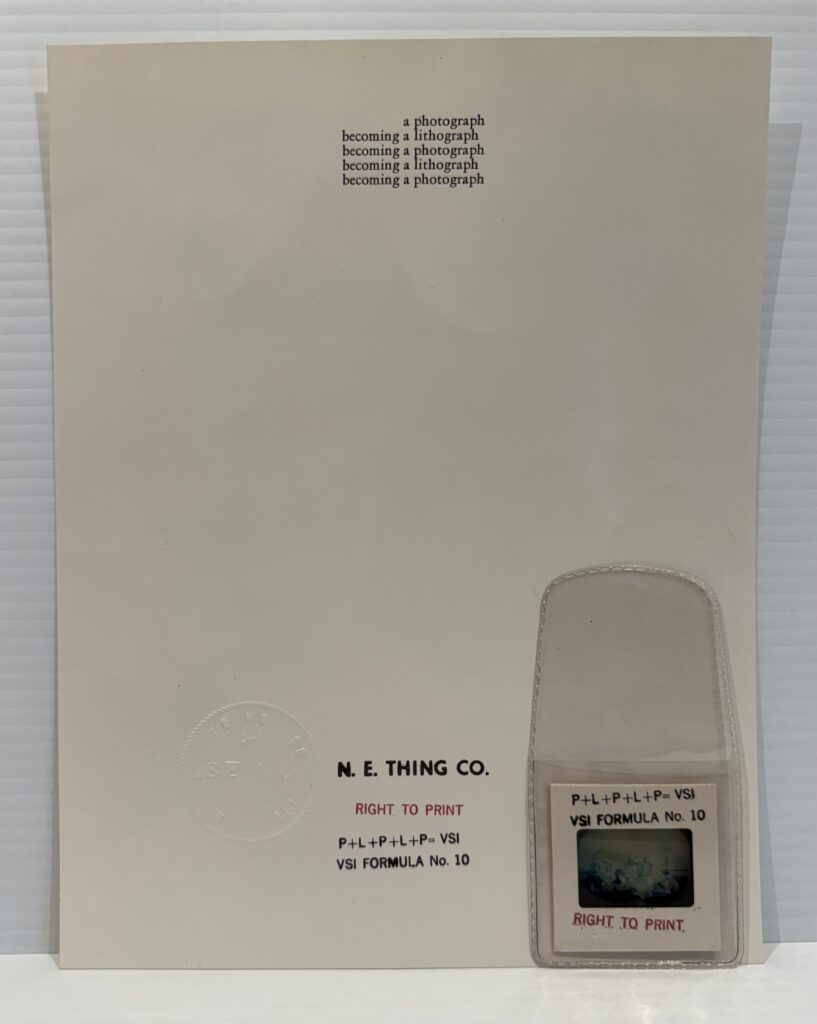
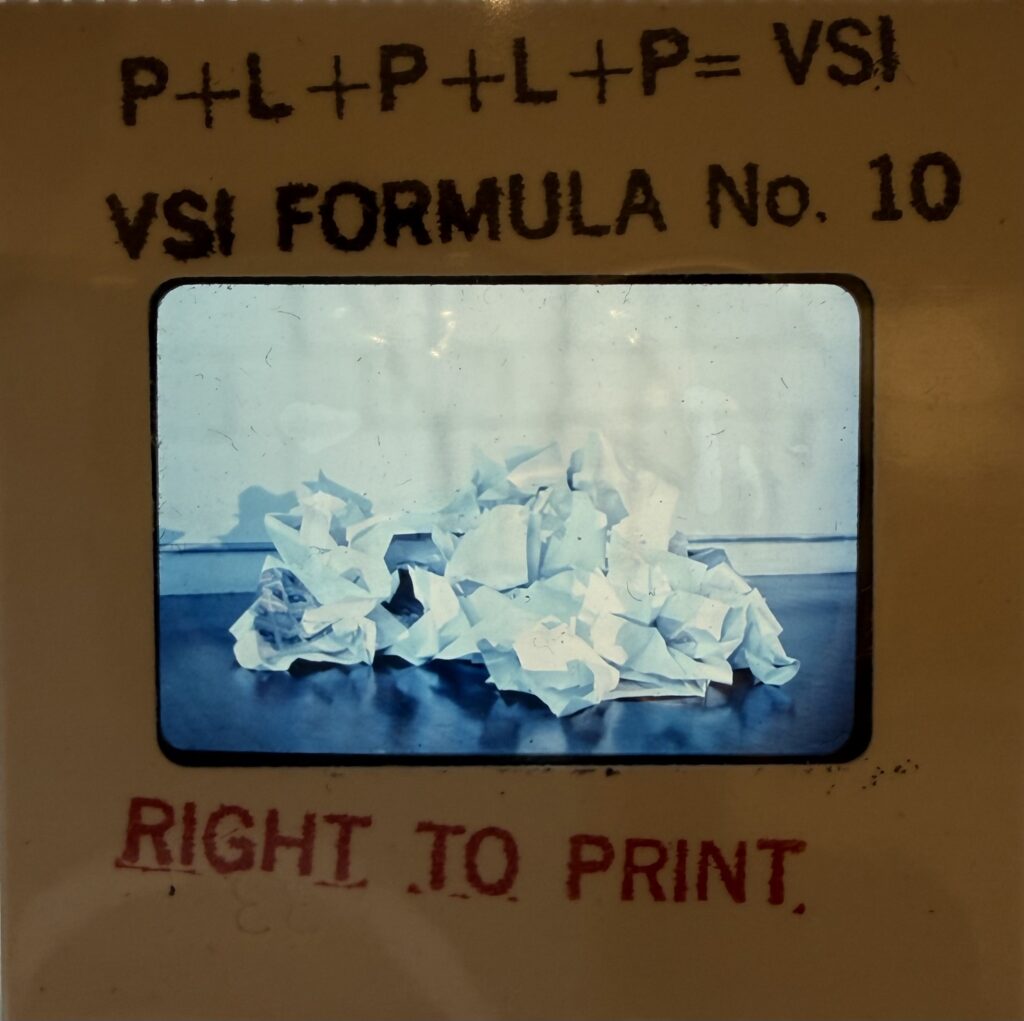
stamped, ”N.E. Thing Co.” & titled lower centre; sold together with an 11 x 8.5 ins sheet with stamped, “Right to Print“, ”N.E. Thing Co.” & titled lower centre; also sold with a colour slide, presented in a plastic pocket; unframed.
Provenance
Robert Rogers, Halifax
Literature
Jayne Wark, “Conceptual Lithography at the Nova Scotia College of Art and Design”, Journal of Canadian Art History, 2009, p. 68 Garry Neill Kennedy, “The Last Art College: Nova Scotia College of Art and Design, 1968-1978”, Art Gallery of Nova Scotia, Halifax/The MIT Press, Cambridge, Massachusetts & London, England, 2012, page 42; illustrated page 42.
“Ian Baxter [N.E. Thing Co.]’s NSCAD print incorporated his 1969 project of a cover design for the May-June issue of Art in America. The cover reproduced sixteen slide photographs documenting previous work by N.E. Thing Co., principally images of landscapes and urban or industrial sites that had been transformed into art by virtue of N.E. Thing Co.’s process of declaration known as ACT, which stood for Aesthetically Claimed Things. Its corollary, ART, stood for Aesthetically Rejected Things.
For his NSCAD lithograph Baxter carried this sequence of transformations back onto itself in a characteristically conceptual procedure of self-reflexiveness. As indicated by the title, P+L+P+L+P=VSI (where P stands for photograph, L for lithograph and VSI for visual sensitivity information), what began in a photographic format (slides) became an offset lithograph for Art in America, which in turn was photographed for printing on a metal lithographic plate. The final photographic transformation took place after the edition was printed. In what Baxter called “a gesture of complete consciousness of the medium,” all fifty prints were crumpled, piled on the floor and then photographed. This series of transformations on the one side of the equation was equal to the total amount of VSI available in the piece as a whole. Those who purchased this work received a flattened-out print as well as a title card and a slide of the pile of crumpled prints.”