
Milne catalogue raisonné no. 302.73
Provenance
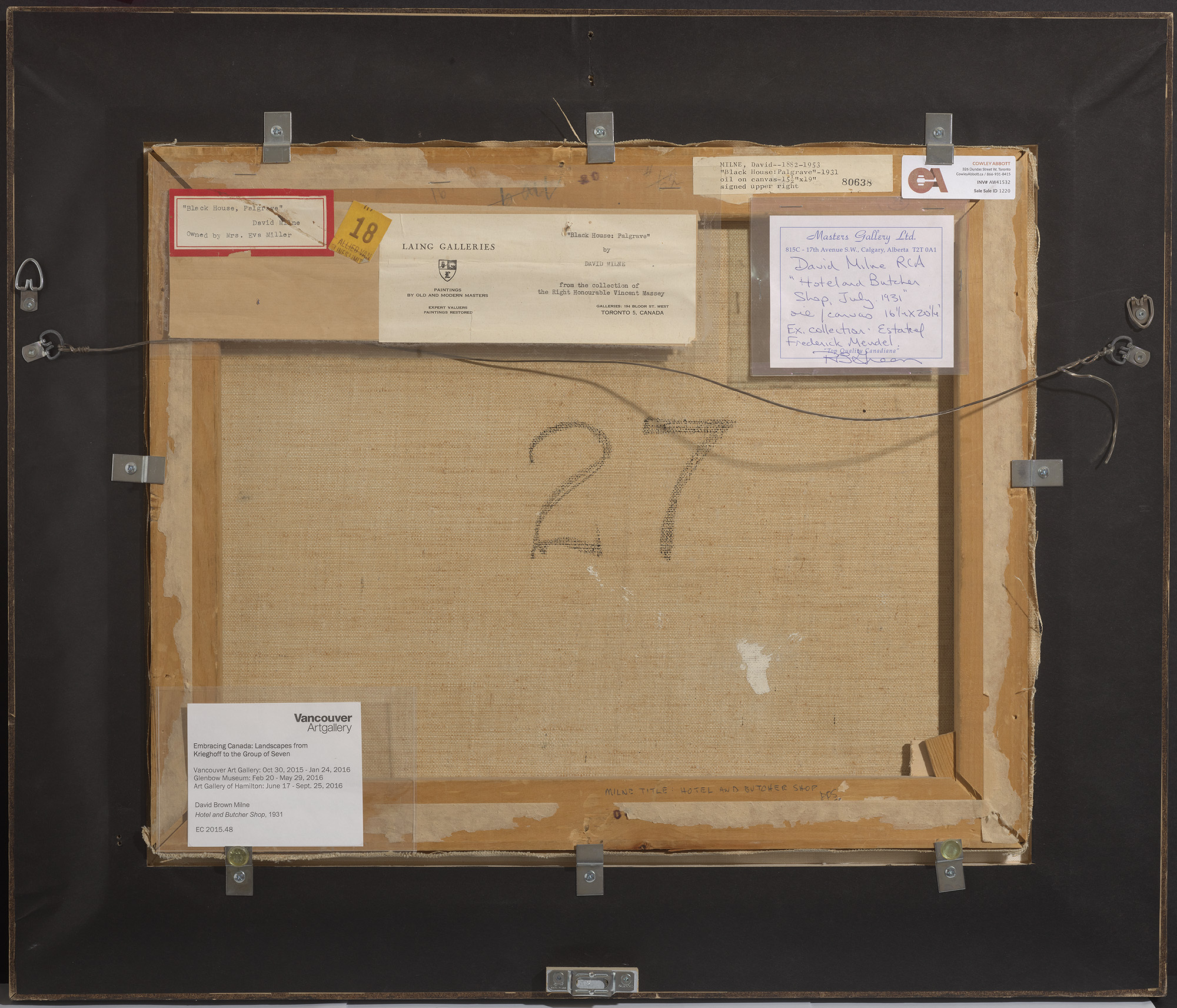
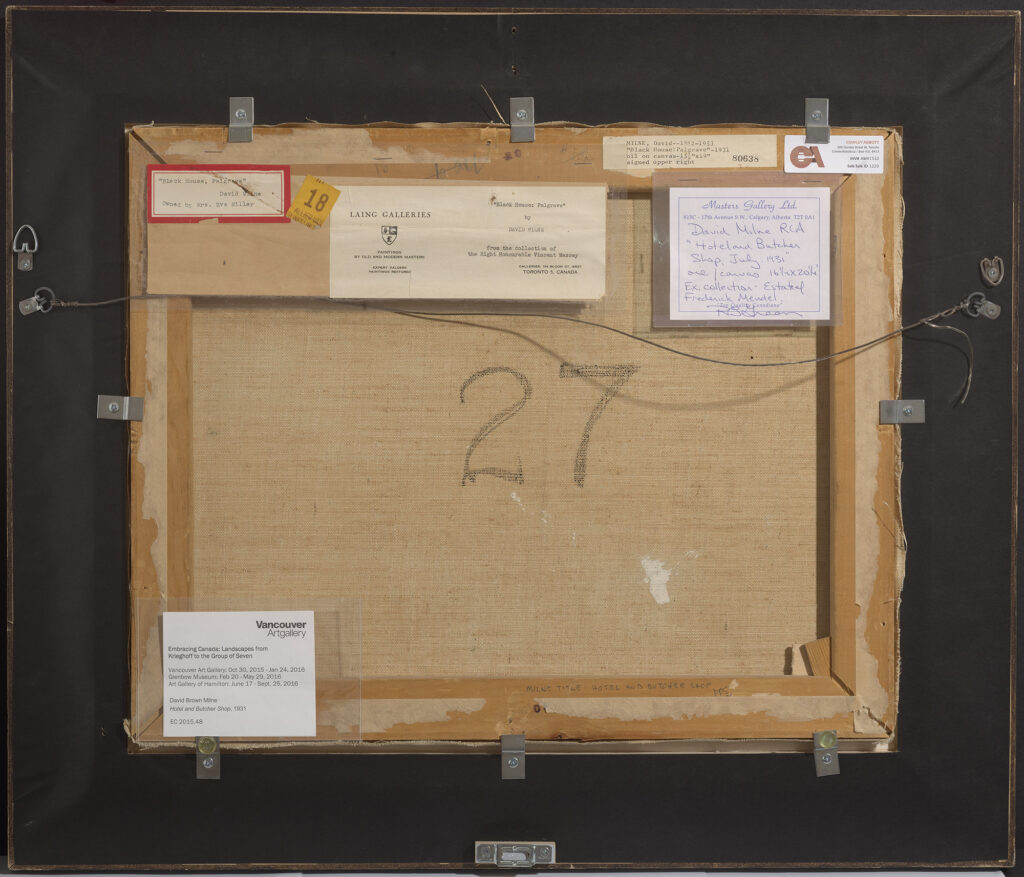
The Right Honourable Vincent Massey, 1934
Laing Galleries, Toronto as “Black House, Palgrave”, 1958
Fred Mendel, Saskatoon
Mrs. Eva Miller, Priddis, Alberta
Masters Gallery, Calgary
Private Collection
Exhibited
“Exhibition of Paintings by David B. Milne”, Mellors Galleries, Toronto, 1934, no. 51 “Exhibition of Pictures by David B. Milne”, James Wilson and Co., Ottawa, February 1935, no. 36 “Exhibition of Paintings by David B. Milne”, W. Scott & Sons, Montreal, 1935, no. 36 “Embracing Canada: Landscapes from Krieghoff to the Group of Seven”, Vancouver Art Gallery; travelling to Glenbow Museum, Calgary; Art Gallery of Hamilton, 30 October 2015‒25 September 2016
Literature
David P. Silcox, “Painting Place: The Life and Work of David Milne”, Toronto, 1996, page 240 David Milne Jr. and David P. Silcox, “David B. Milne: Catalogue Raisonné of the Paintings, Volume 2: 1929‒1953”, Toronto, 1998, listed and reproduced page 517, no. 302.73 Ian Thom, et al., “Embracing Canada: Landscapes from Krieghoff to the Group of Seven’, Vancouver/London, 2015, reproduced page 183
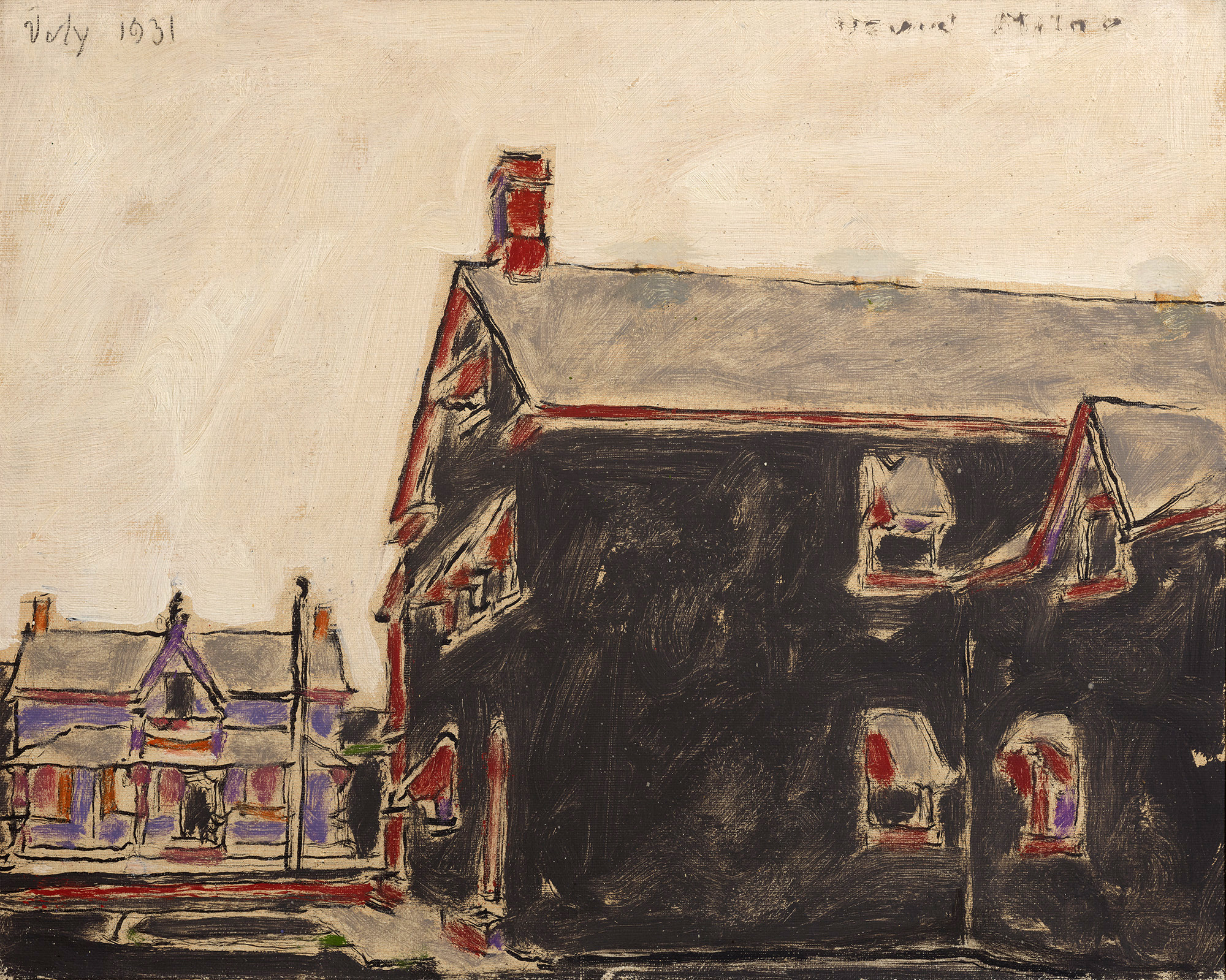
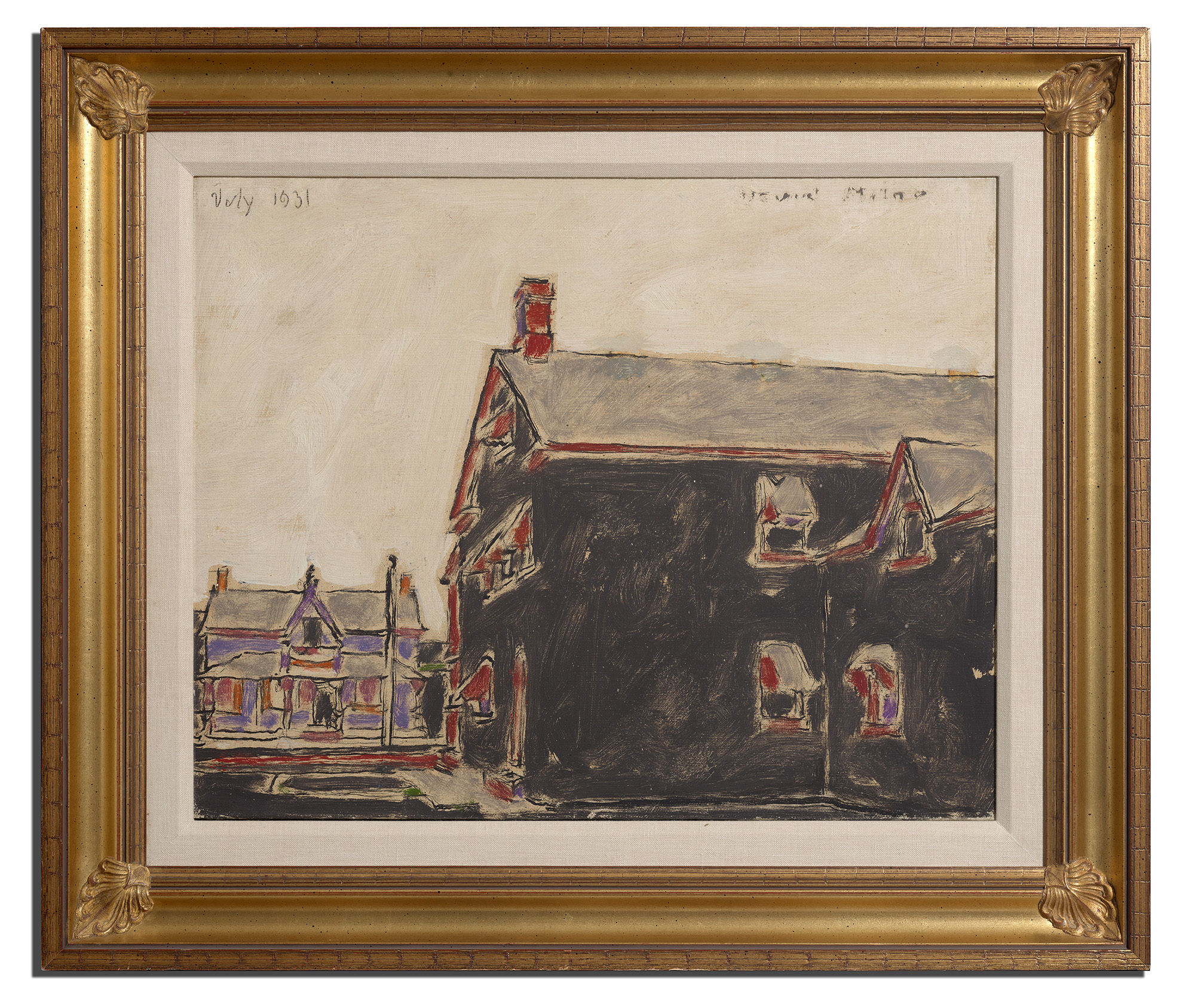
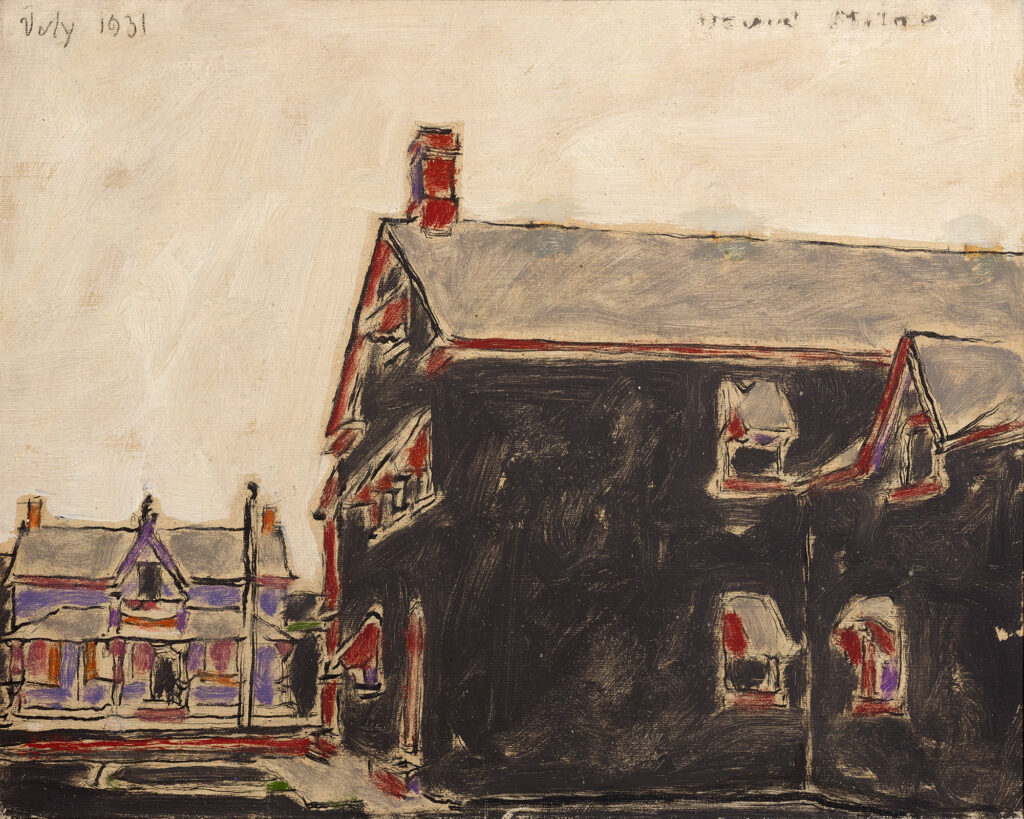
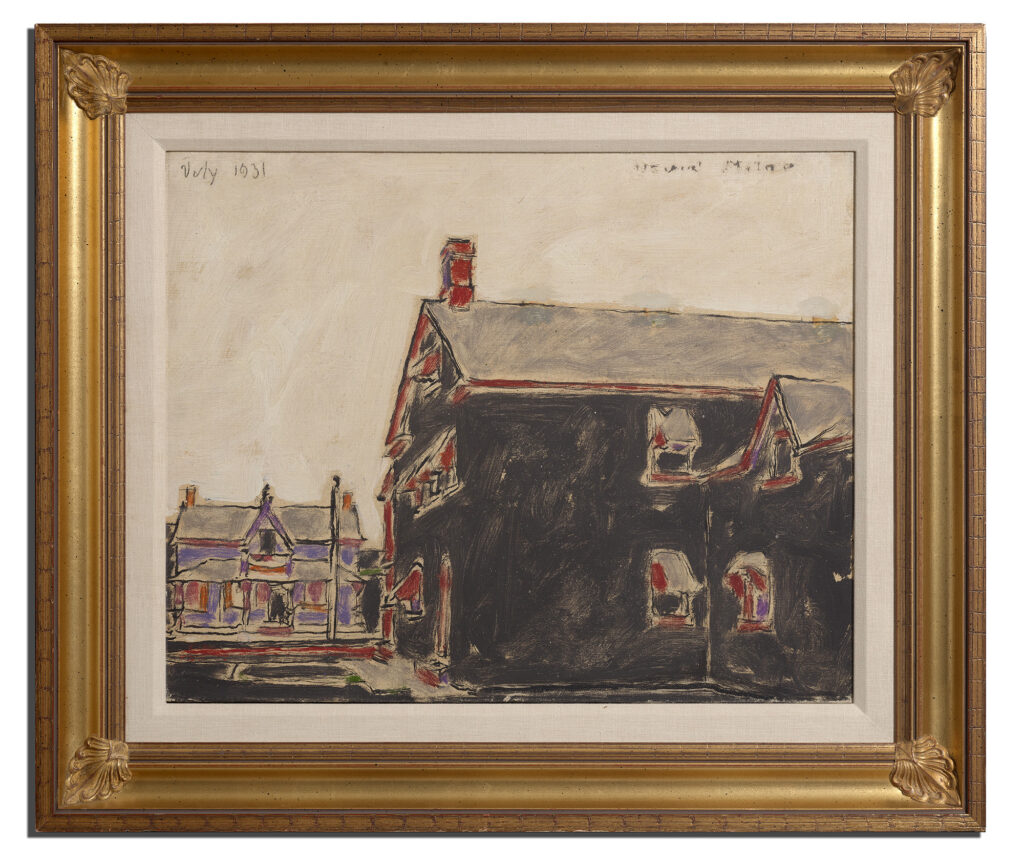
David and Patsy Milne moved to Palgrave – in the Caledon Hills north of Toronto – from the USA in the spring of 1930. An artist who constantly worked out of doors, Milne was attracted to the calm, agrarian landscapes that he had also portrayed over his many years living in upper New York State. As we see in “Hotel and Butcher Shop (Queen’s Hotel on a Dark Day)“, the town also supplied picturesque subjects. Palgrave was ideal aesthetically – always Milne’s primary concern – but it is salutary to think about the ‘economy’ of this painting too. The Palgrave paintings of 1930‒33 are among Milne’s most accomplished and valued, yet their unique appearance is more than a style: it reflects how hard the Great Depression hit the Milnes. Though he exhibited widely at this time, beyond the patronage of the Massey family, sales were meagre. David Milne worked as a farm labourer in return for firewood, for example, and struggled to buy art materials. Characteristically frank and insightful about the connections between his manner of painting and his life circumstances, Milne explained in a letter from this time: “The reason for this way of putting on the paint is a feeling for economy – of aesthetic means … a hankering to do things by the slightest touch on the canvas, the brush meeting it and no more … Some feeling of economy prevents me from varying hues in the same picture (by adding white or less white). This is so strong that I sacrifice economy of touch … to economy of value in the hues. These things are slight when put in words but they are very strong and control you pretty completely.” In “Hotel and Butcher Shop”, Milne made parsimony an aesthetic virtue. He suppressed colour and worked instead with areas of light and dark (“values”) to capture the hotel that dominates the foreground and the shop across the street. Applying pigment rapidly and sparely across the entire surface – while encouraging glimmers of light to shine through even the darkest area on the wall of the near building‒the painting transmits a sense of life and interest in what was an everyday summer scene. Milne metred out his colours to save them but also for visual effect. The restrained reds and purples that inflect these buildings have their animating effect not only because it was a ‘dark day’ but also through the genial economy of Milne’s signature technique.
We extend our thanks to Mark A. Cheetham for contributing the preceding essay. Mark has written extensively on Canadian artists, including Jack Chambers, Alex Colville, Robert Houle, and Camille Turner, most recently in the collection “Unsettling Canadian Art History” (2022). He is a professor of Art History at the University of Toronto.