Provenance
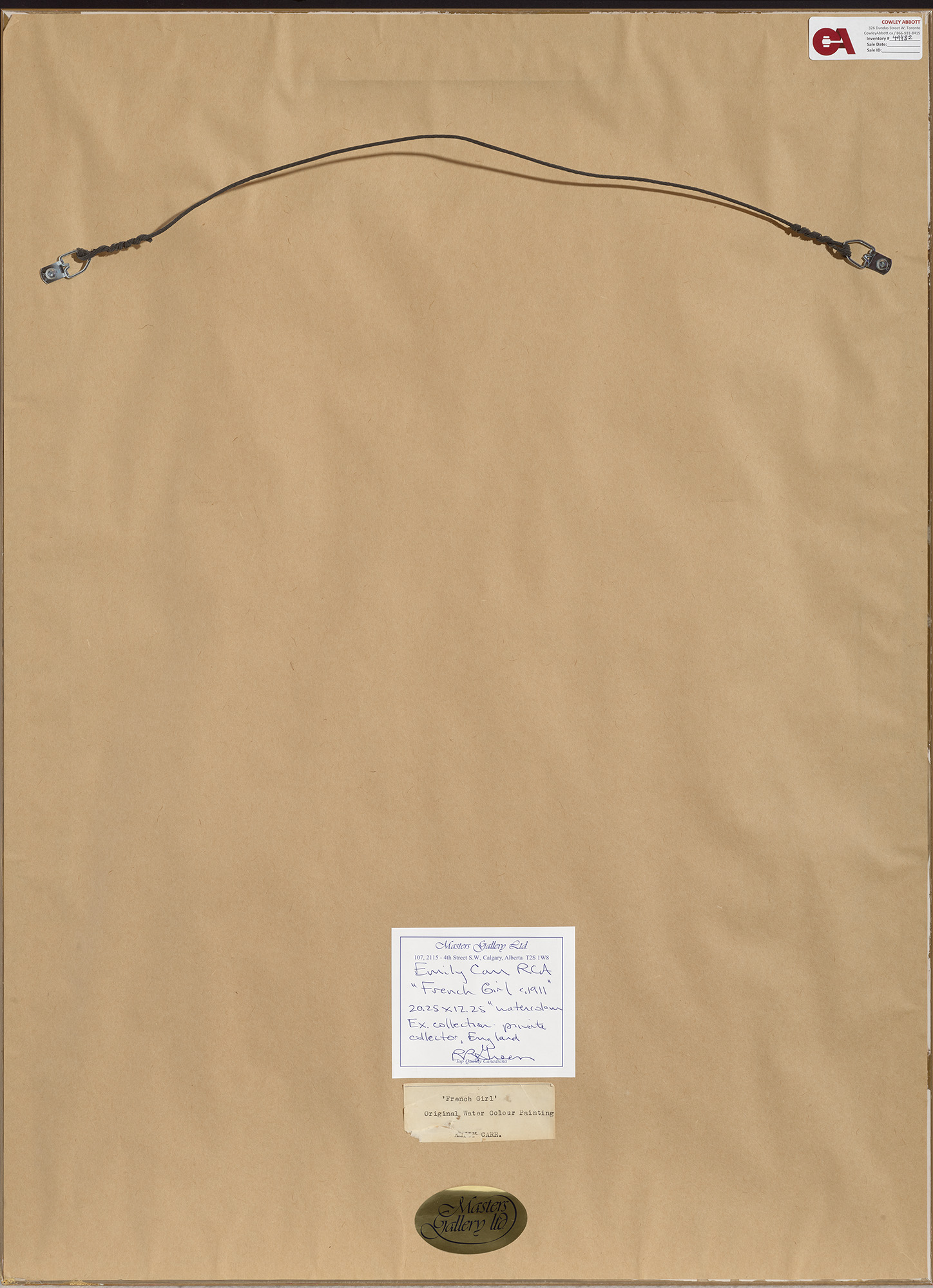
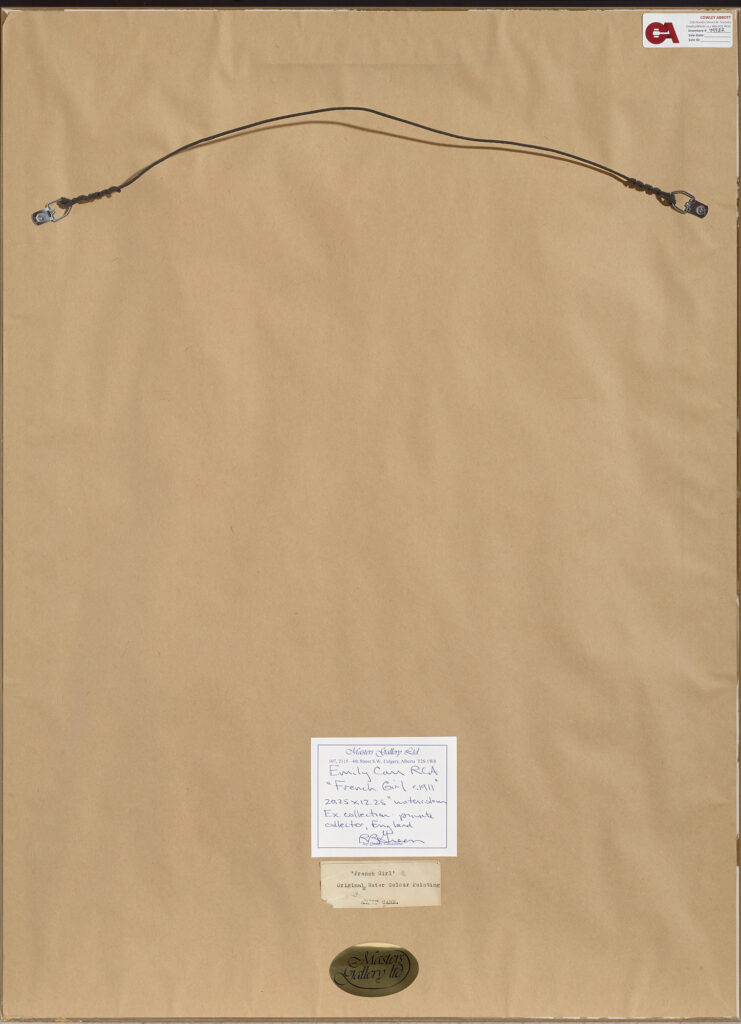
Private Collection, England
Joyner Waddington’s, auction, Toronto, 20-21 November 2007, lot 30
Masters Gallery, Calgary
Private Collection
Literature
Maria Tippett, “Emily Carr: A Biography”, Markham, 1982, pages 95-96 Ian M. Thom, “Emily Carr in France”, Vancouver, 1991, pages 14, 27-30
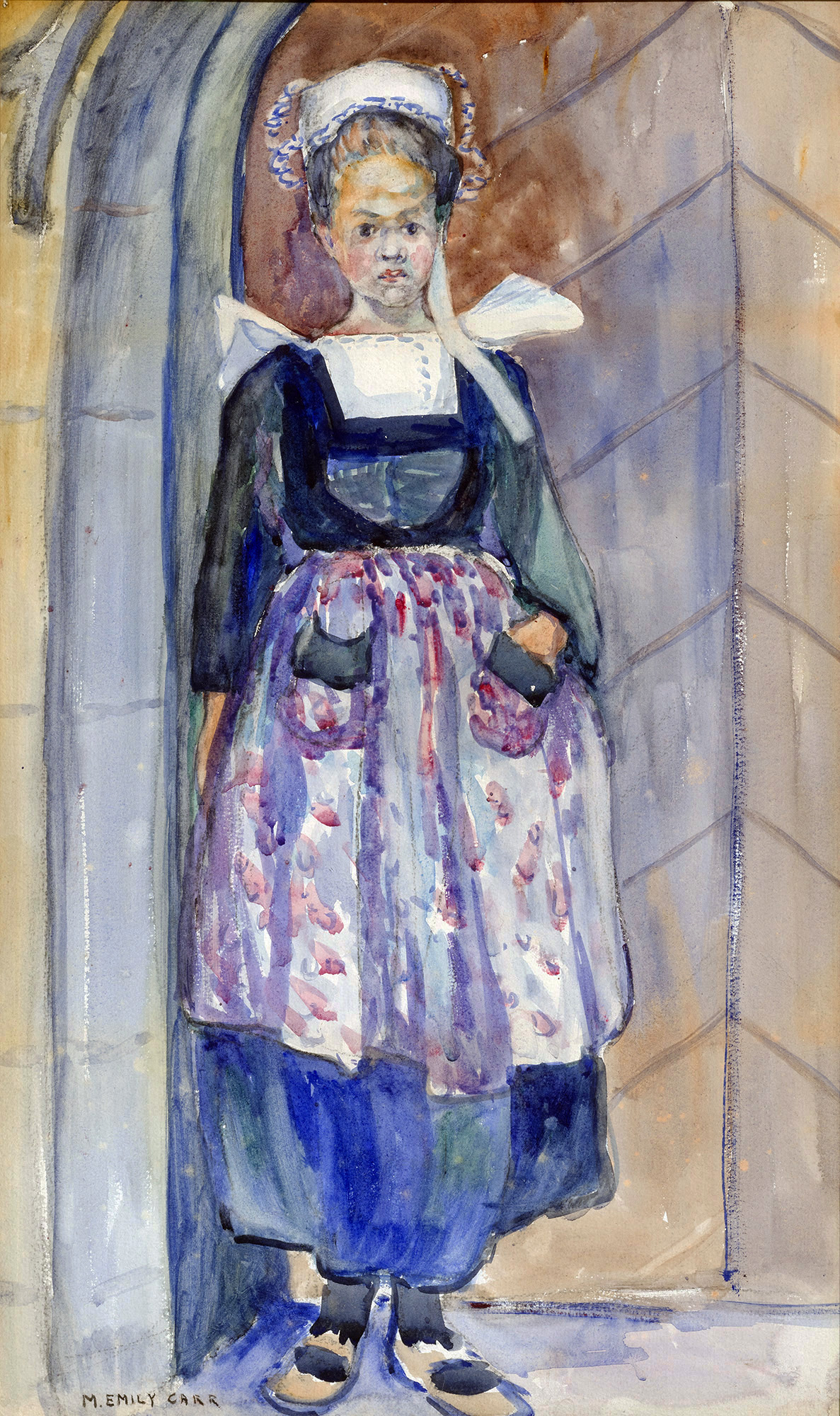
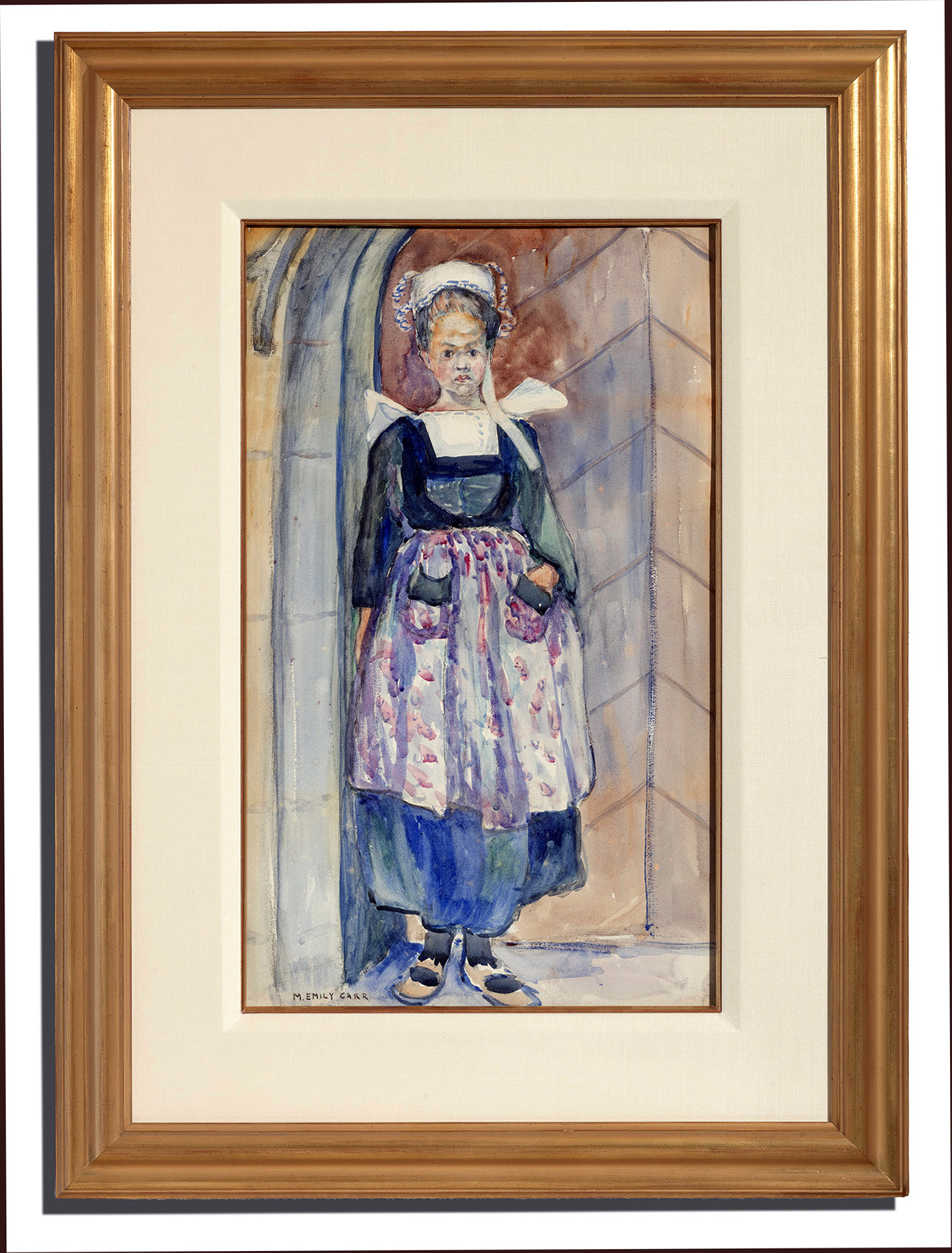
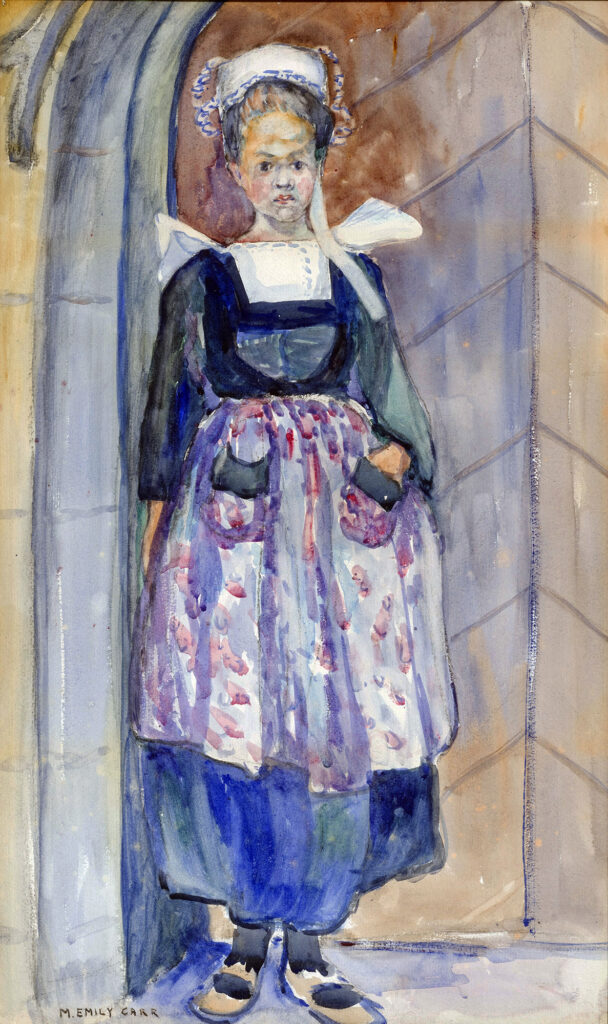
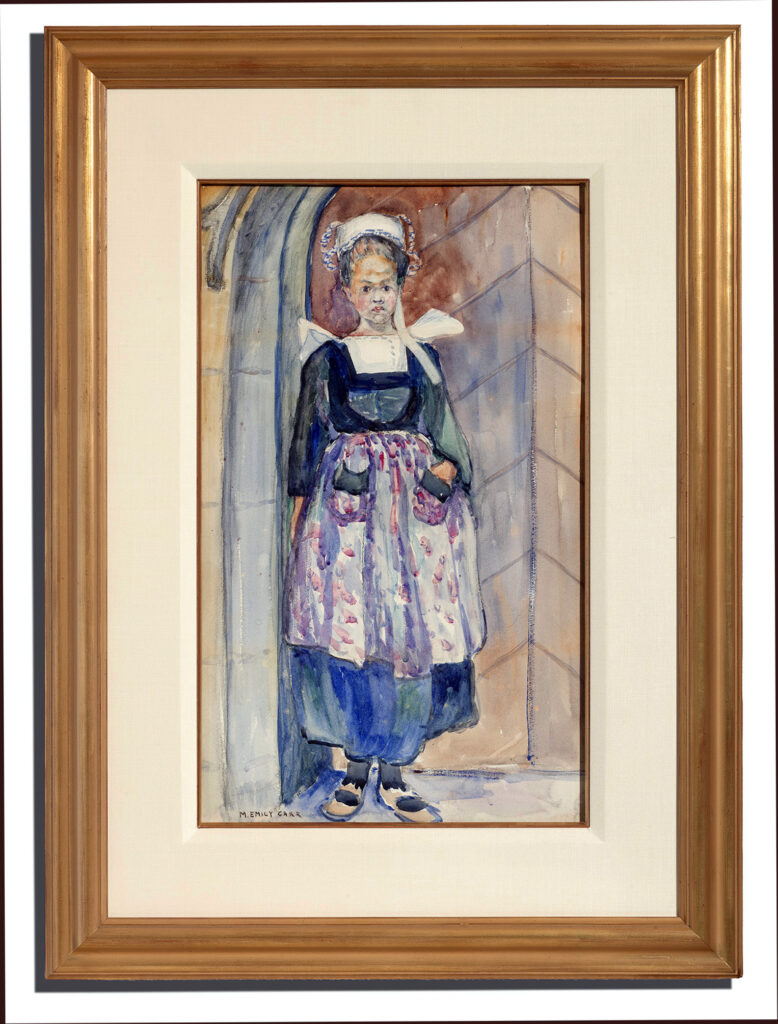
Emily Carr’s avant-garde style emerged from her artistic training in France, where she studied under modernist painters Harry Gibb and Frances Hodgkins. “French Girl” was painted by Carr towards the end of her stay in the late summer of 1911, when the artist spent several weeks honing her watercolour skills in a coastal town in Brittany. After a tremendously productive and fulfilling experience with Gibb during the summer of 1911, Emily Carr was still not yet ready to return to Canada, detached from the art centres and critics, for she feared that she “would go home and drown in the uncharted sea of tremendousness.” She had heard that an artist from New Zealand named Frances Hodgkins was leading watercolour classes in the small port town of Concarneau, on the coast of Brittany. “An artist with an exuberant Late Impressionist technique”, Hodgkins was a brilliant watercolourist whose work displayed spontaneity and imaginative colour combinations. Carr spent the late summer and early fall of 1911 in Concarneau with Hodgkins, creating watercolour depictions of the crooked cobblestoned streets and its residents of the old fortified town. The artist said of her stay in Concarneau: “I worked with fresh gay vigor sitting in wine shops and sail lofts on the quay or back in fields. I learnt a lot and was happy.” Painted during this formative stay in Concarneau, “French Girl” is a rare and revealing example of Carr’s engagement with the human figure. The watercolour depicts a young Breton woman standing in a stone doorway, dressed in the characteristic regional costume, including a starched white bonnet, black bodice, and patterned apron. Carr found that her new Fauve palette could easily be incorporated into this traditional medium. The softened contour lines and modulated washes of violet, rose, and indigo reveal the artist’s transition from academic naturalism to the more liberated, painterly approach that defined her later work. Maria Tippet remarks that “the heavy broken line with which Hodgkins outlined her forms quickly became the structural basis for almost all of Carr’s Concarneau work.” The strong, loose black outlines of the buildings in “French Girl” show Carr’s increasing ease in the medium and diminishing concern with detail and realism. Ian M. Thom writes: “The watercolours from the summer of 1911 are perhaps the most important of the works which Carr executed in France. As a group they have an assurance and immediacy which is not always felt in the oils.” Carr’s stay in Concarneau marked a period of profound change in her watercolour painting, serving as an excellent conclusion to her fourteen-month sojourn in France. She had taken the final leap from the traditional school to the modern in her colourful interpretations of the Brittany coast. Carr visited Paris briefly in the fall, where two of her paintings were being shown in the Salon d’Automne at the Grand Palais. In November 1911, she returned to Victoria a more mature, skilled, and confident artist, and held an exhibition of her French works in March 1912. In an article published by “The Vancouver Province” on March 27, 1912 regarding her exhibition, Carr was described as “an enthusiastic disciple of the modern French school of art.”