
Provenance
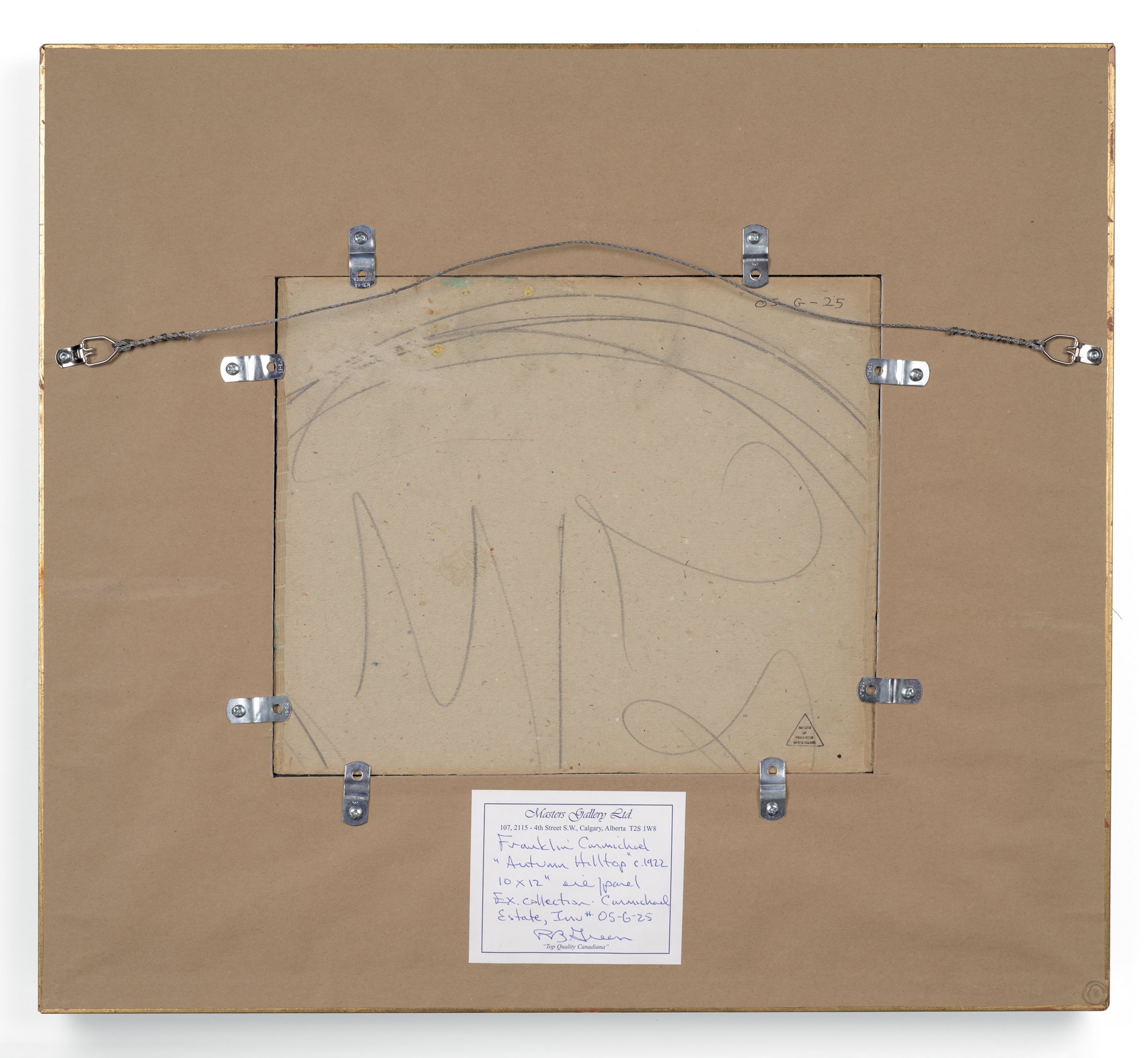
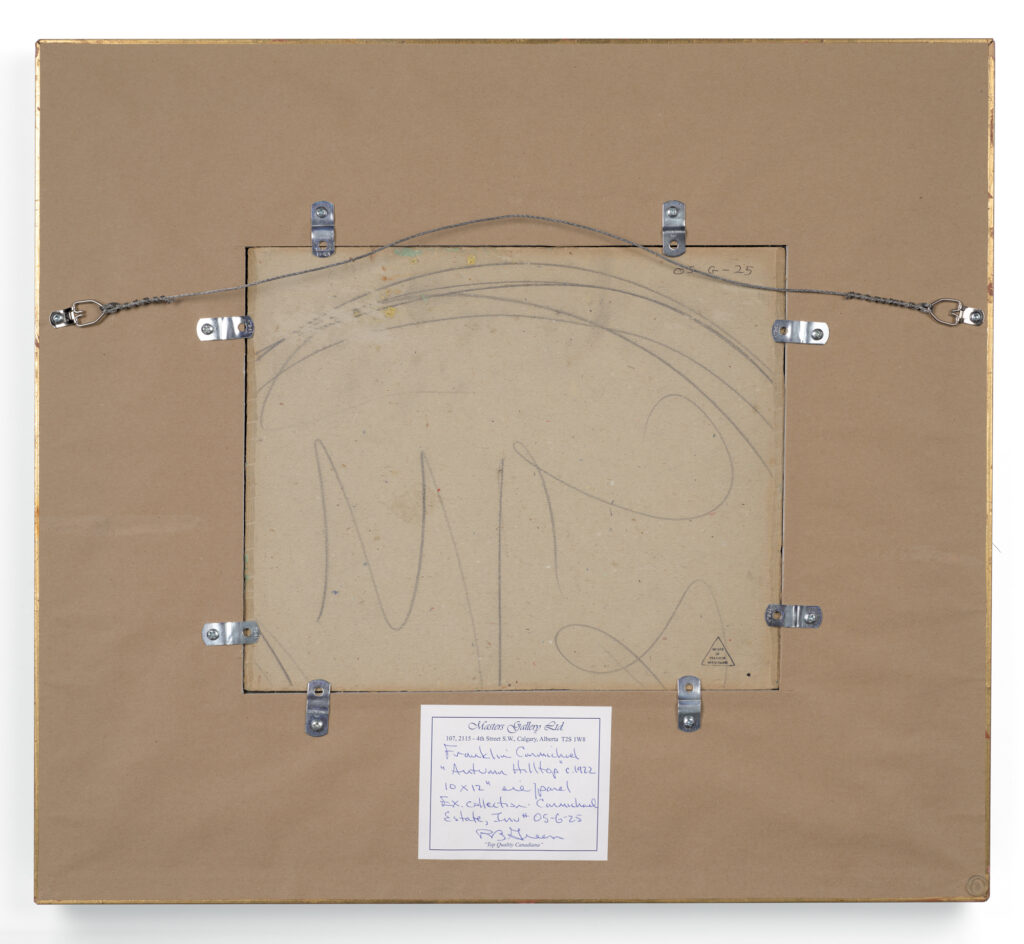
Estate of the artist, by descent,
Private collection, Ontario
Masters Gallery, Calgary
Private collection
In 1920, Franklin Carmichael became a founder of the Group of Seven landscape painting collective, a moment that marked his first significant recognition as a contributor to modern art in Canada. Beginning in 1912, he had participated in exhibitions of the Ontario Society of Artists (elected 1917), Canadian National Exhibition, and the Royal Canadian Academy of Arts. But participation in the Group movement with just six other artists versus the huge group-artist society exhibitions, shone a spotlight on his practice that had not been possible before. Showing a total of forty-two works in the first three exhibitions of 1920, 1921 and 1922, visitors to the Art Gallery of Toronto could begin to experience the evolution of an artist. And it was in these early years of the Group’s formation that Carmichael’s artistic voice began to take shape as a masterful colourist and painter of light. Carmichael had been consistently engaged in plein air sketching in oil since his return from study in Antwerp, Belgium in the fall of 1914.
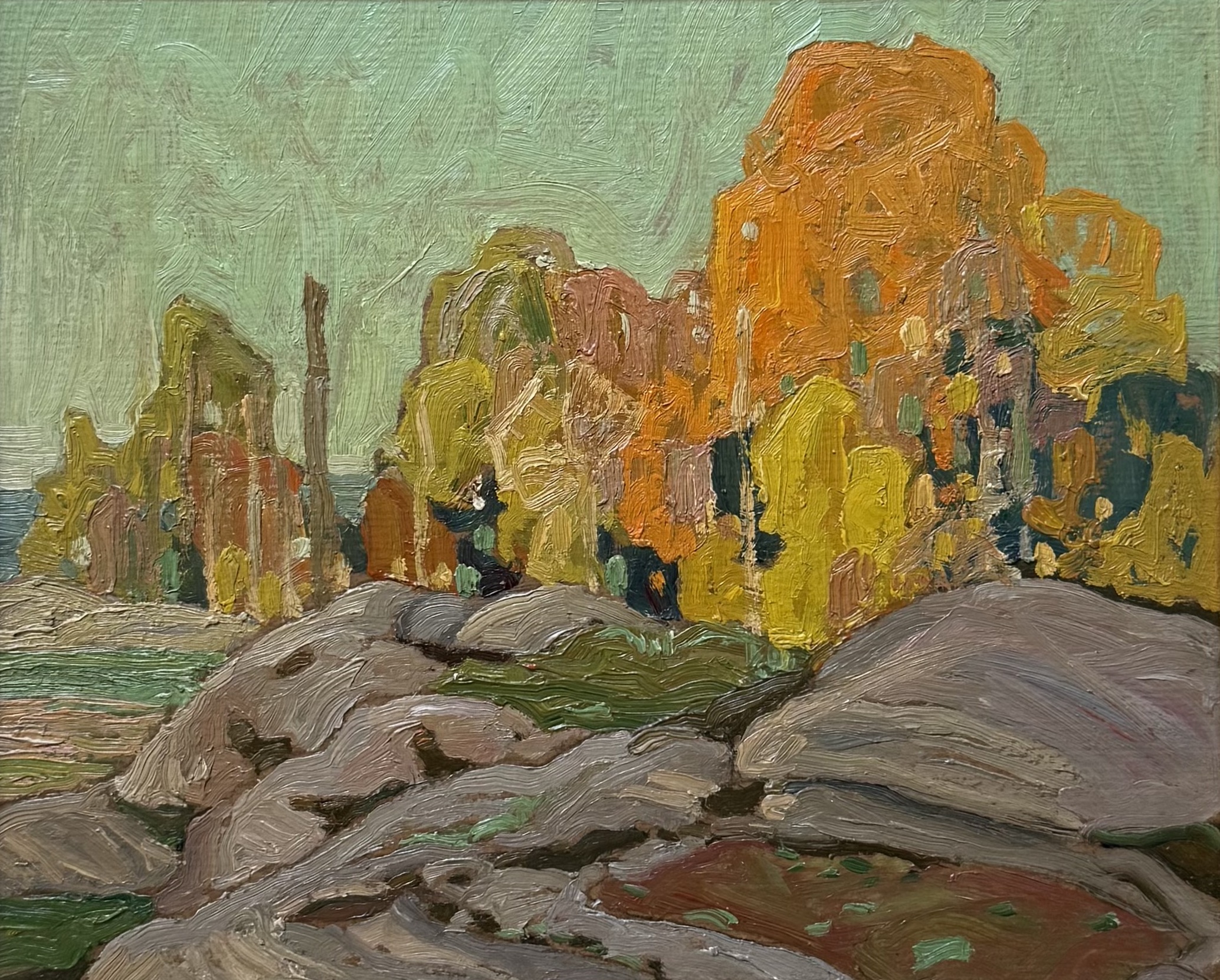
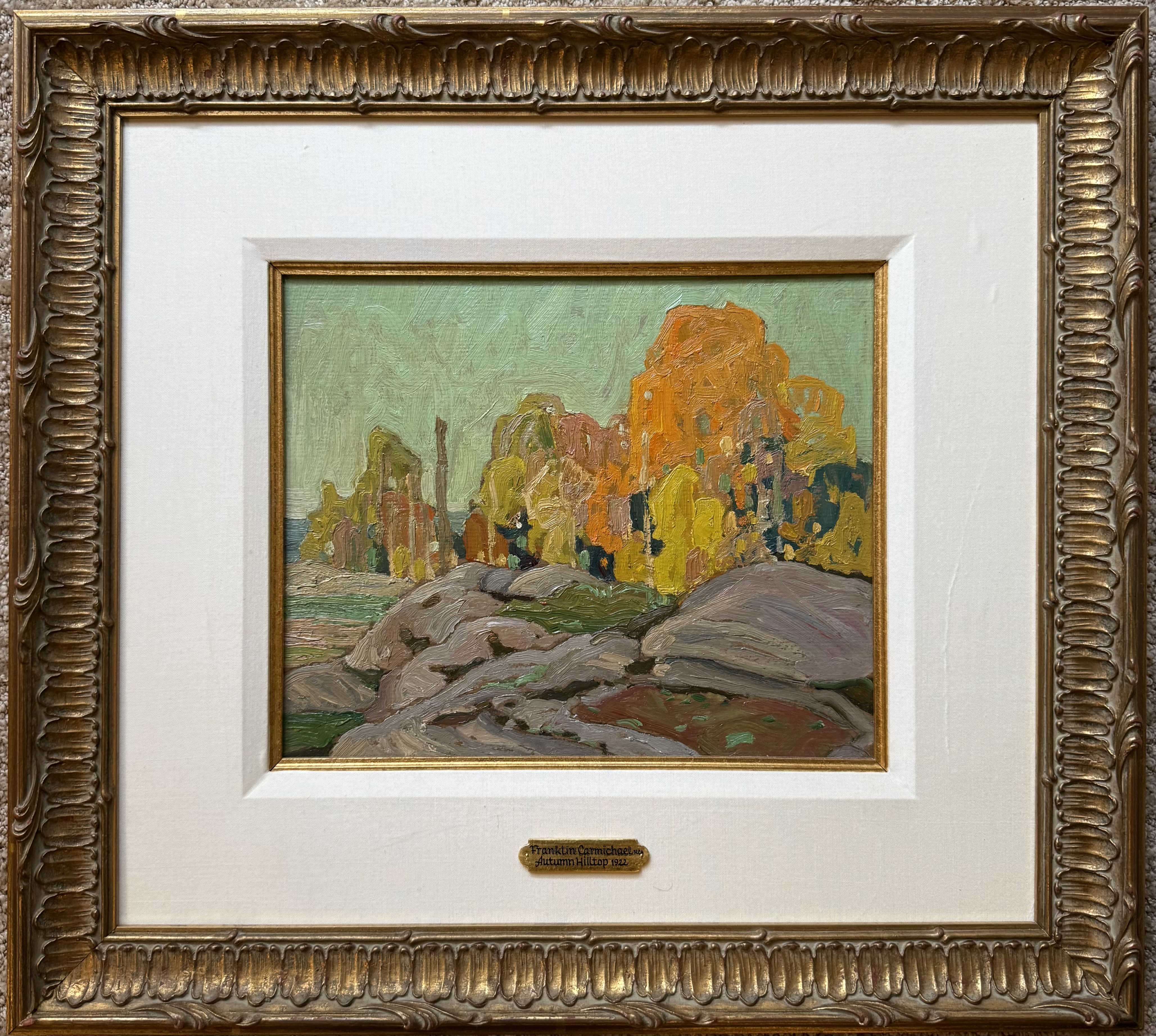
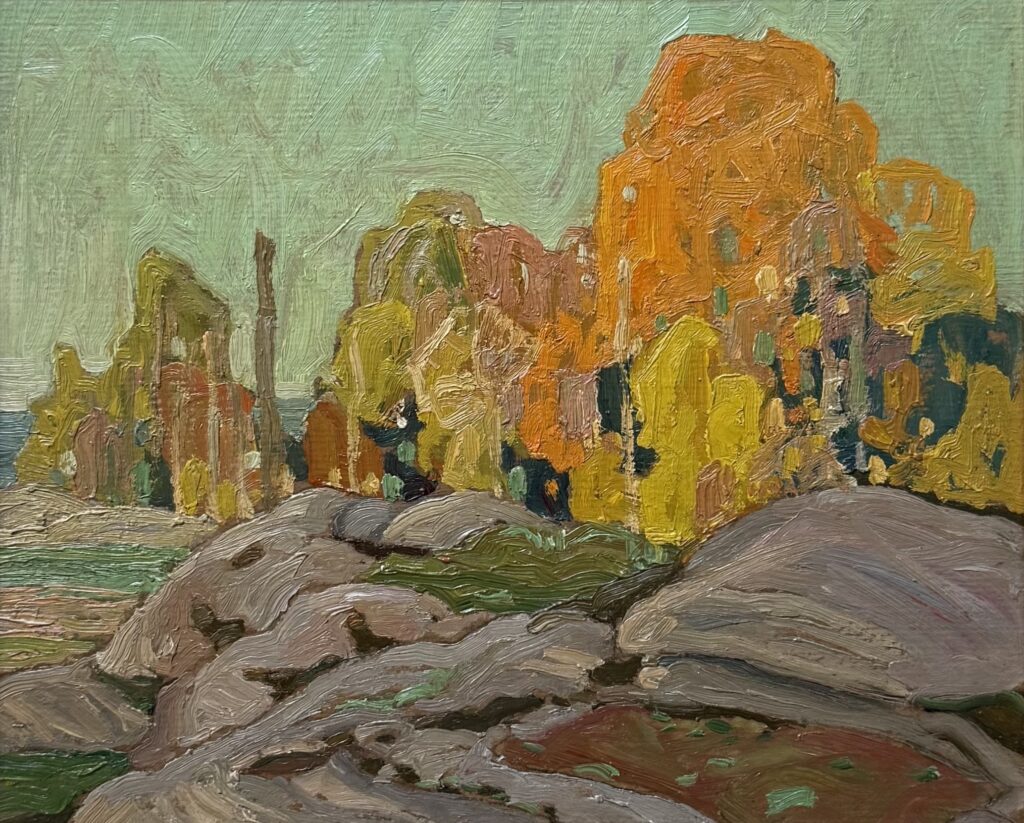
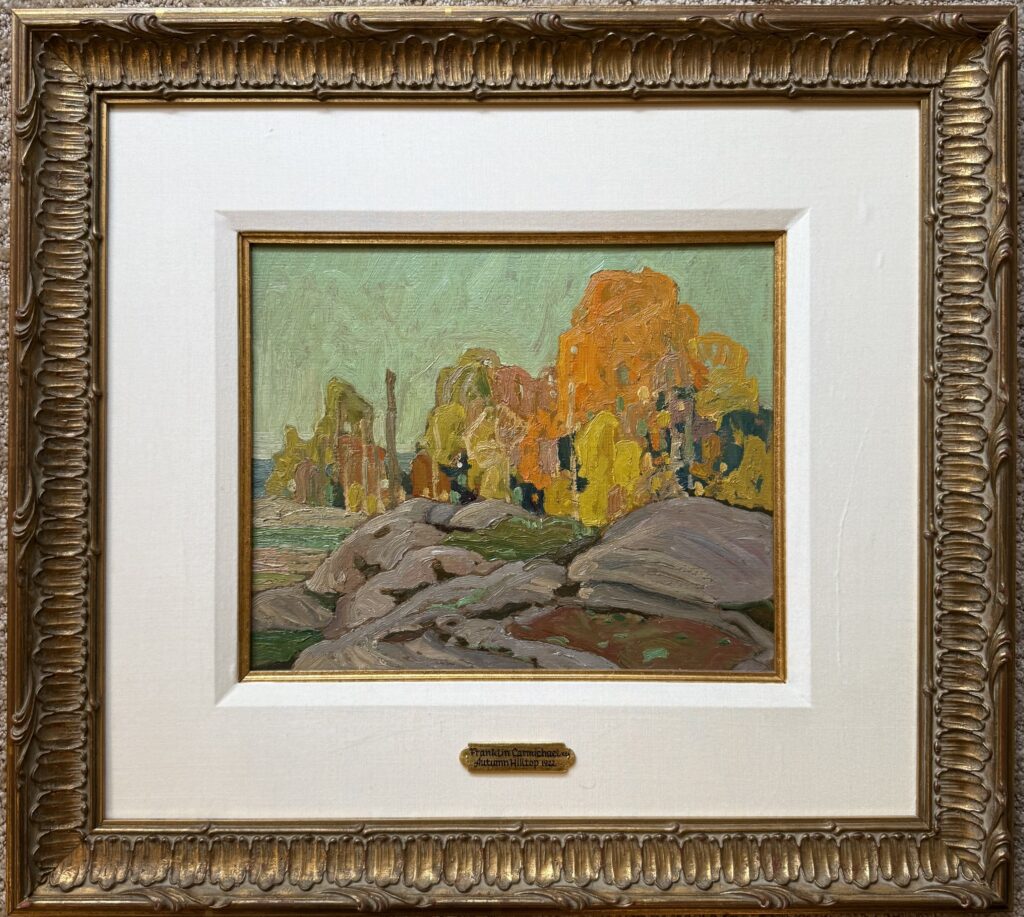
By the time of the 1920 exhibition, Carmichael had resolved that the fall season offered immense painterly possibilities, notably the glorious pageantry of fall colour offered by the changing colours of the deciduous trees‒red, yellows and oranges‒set against the evergreens. He would explore the beauty of fall change for the rest of his landscape painting career. In “Autumn Hilltop”, Carmichael concentrates on these effects in one of his shallowest compositions from this period of his work, like his renown easel painting, “Silvery Tangle”, 1921 (Art Gallery of Ontario) and to the sketch “Autumn Foliage against Grey Rock” (National Gallery of Canada). While his use of colour is stunning, and dominates the overall impression, the bald rock face in the foreground occupies nearly one third of the composition. It was a strategic decision that set the middle ground colours into sharp relief. In the far distance, only a tiny portion of the composition is dedicated to a distant hazy sky. However, it is not truly a hazy day for the lighting in the foreground bears witness to a blast of sunlight from behind the artist to illuminate his subject, resulting in the striking palette of reds, yellows, and oranges.