$10,000
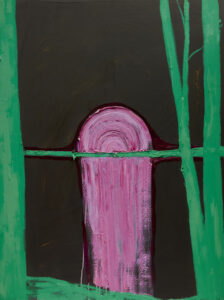
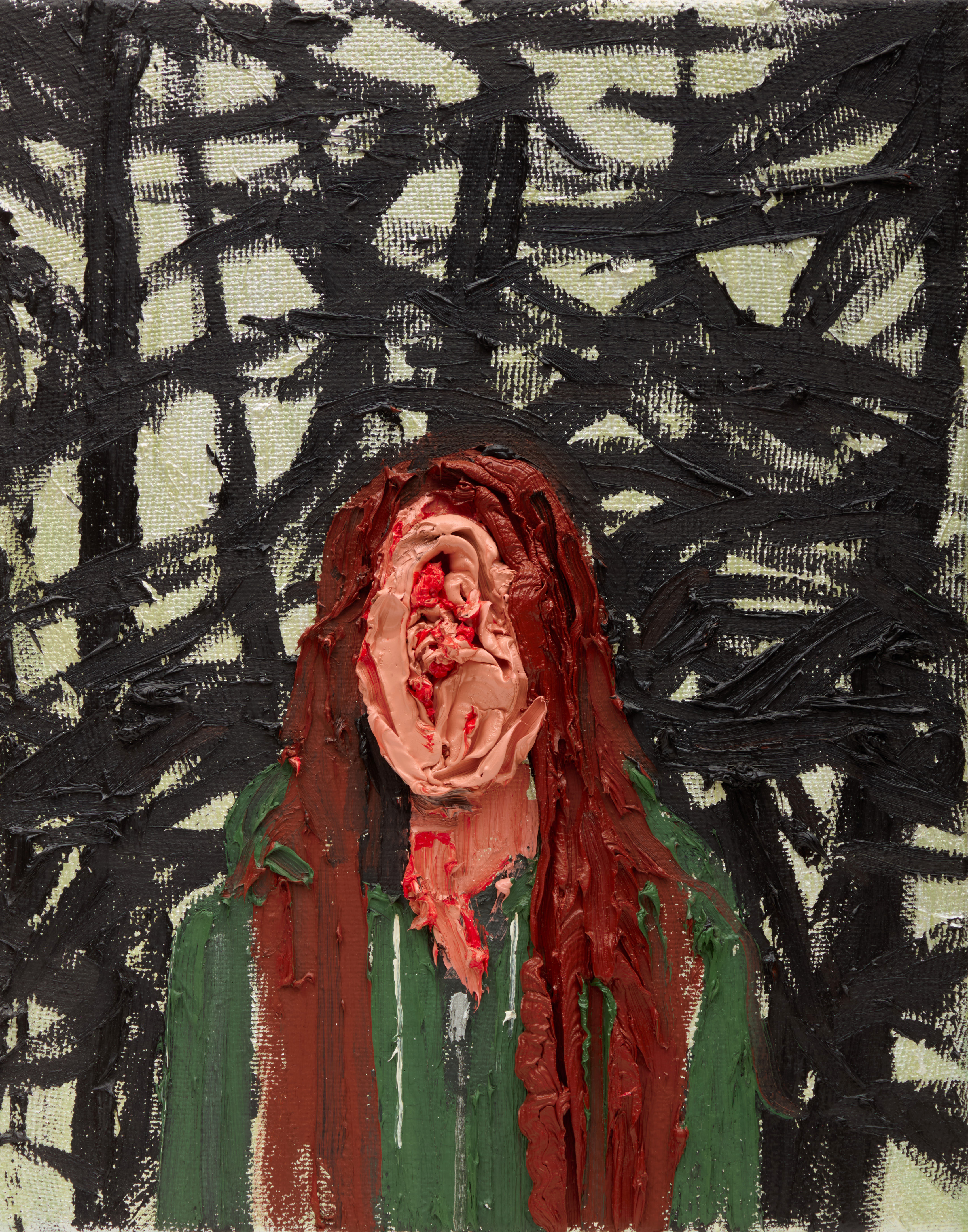
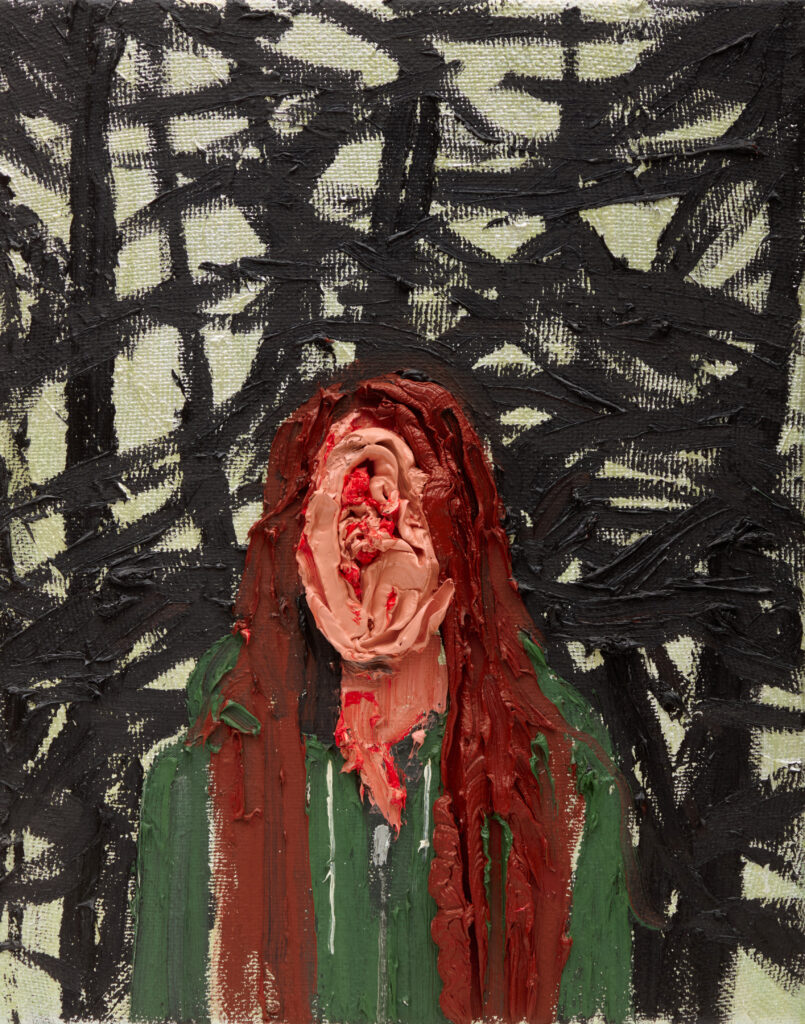
Some people recoil from blood and guts, while others are transfixed. Both are fair responses to what literary critic Julia Kristeva termed The Abject[i], and to objects like this painting, which threaten whatever psychic lines we’ve drawn between life and death, or between the essence of a person and their corporeality. We have souls, but we’re also essentially a pump and some plumbing. Green Hoodie is part horror-movie and part cartoon, in a nauseating silly-putty pink. It seems the outcome of a demi-god (the artist?) pushing his fingers inside a woman’s head and performing a few sickening turns of the wrist. But it also reveals the artist’s fascination with the very ‘insides’ of his subject, Lori. In this way, it’s the ultimate valentine. There’s so much vitality here, and morbidity, and intrigue, like how Margaret Atwood described death in her poem The Double Voice as “…a dead dog / jubilant with maggots…[ii]”
On a personal note, meanings of artworks change with time and context. These early Lori portraits feel even more raw with the added knowledge that Lori, Dorland’s partner of 37 years, is sick. He is her main caregiver, and most of the works he paints now are completed on breaks from the bedside.
[i] Julia Kristeva developed her foundational theory of the abject in her 1980 book Powers of Horror, 1982.
[ii] The Double Voice, by Margaret Atwood, 1970.