
Provenance
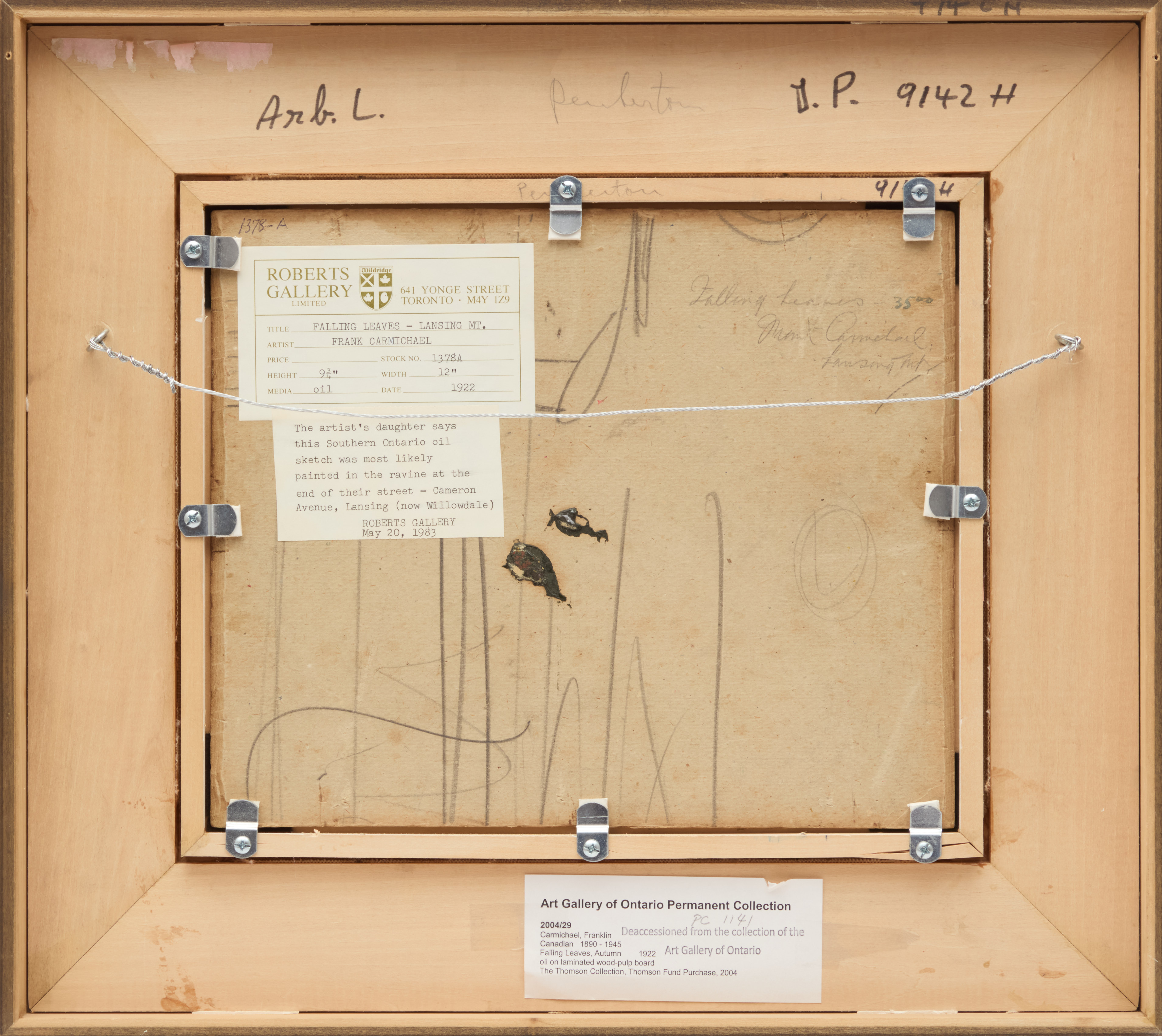
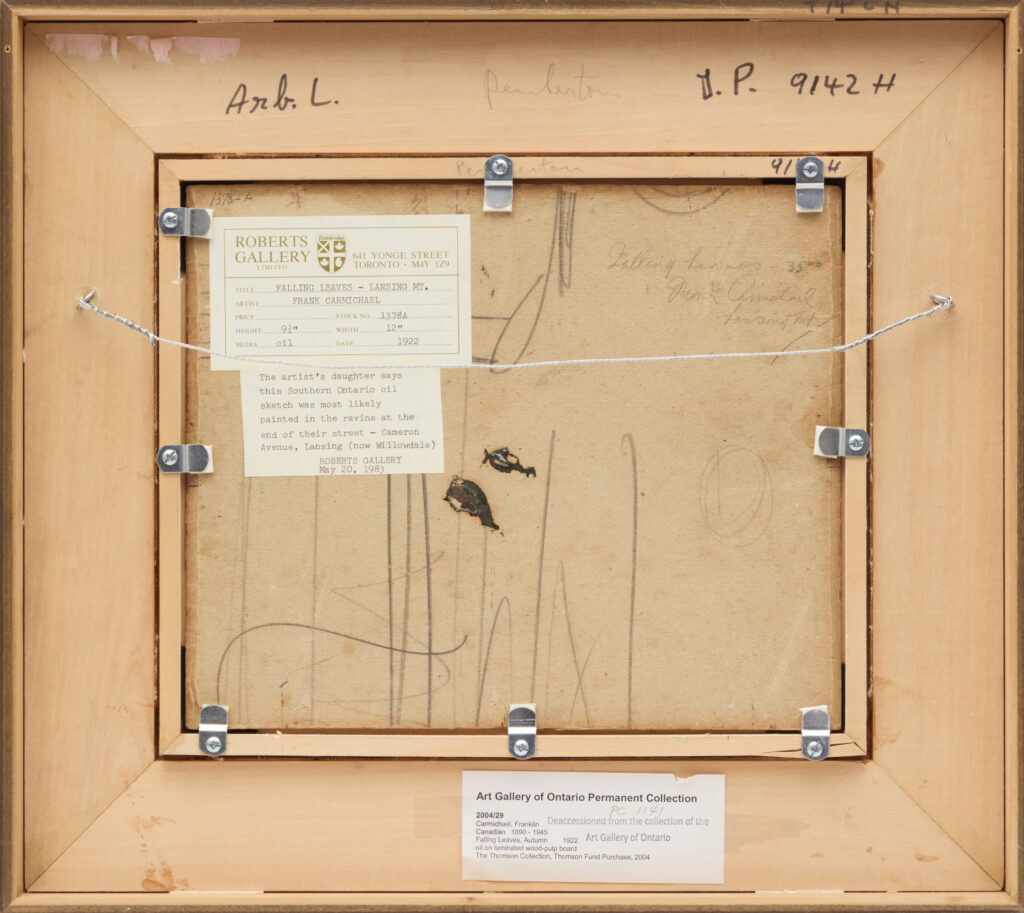
Roberts Gallery, Toronto as Falling Leaves-Lansing Mt.
Collection of Ken Thomson, Toronto
Gifted to The Art Gallery of Ontario, 2004
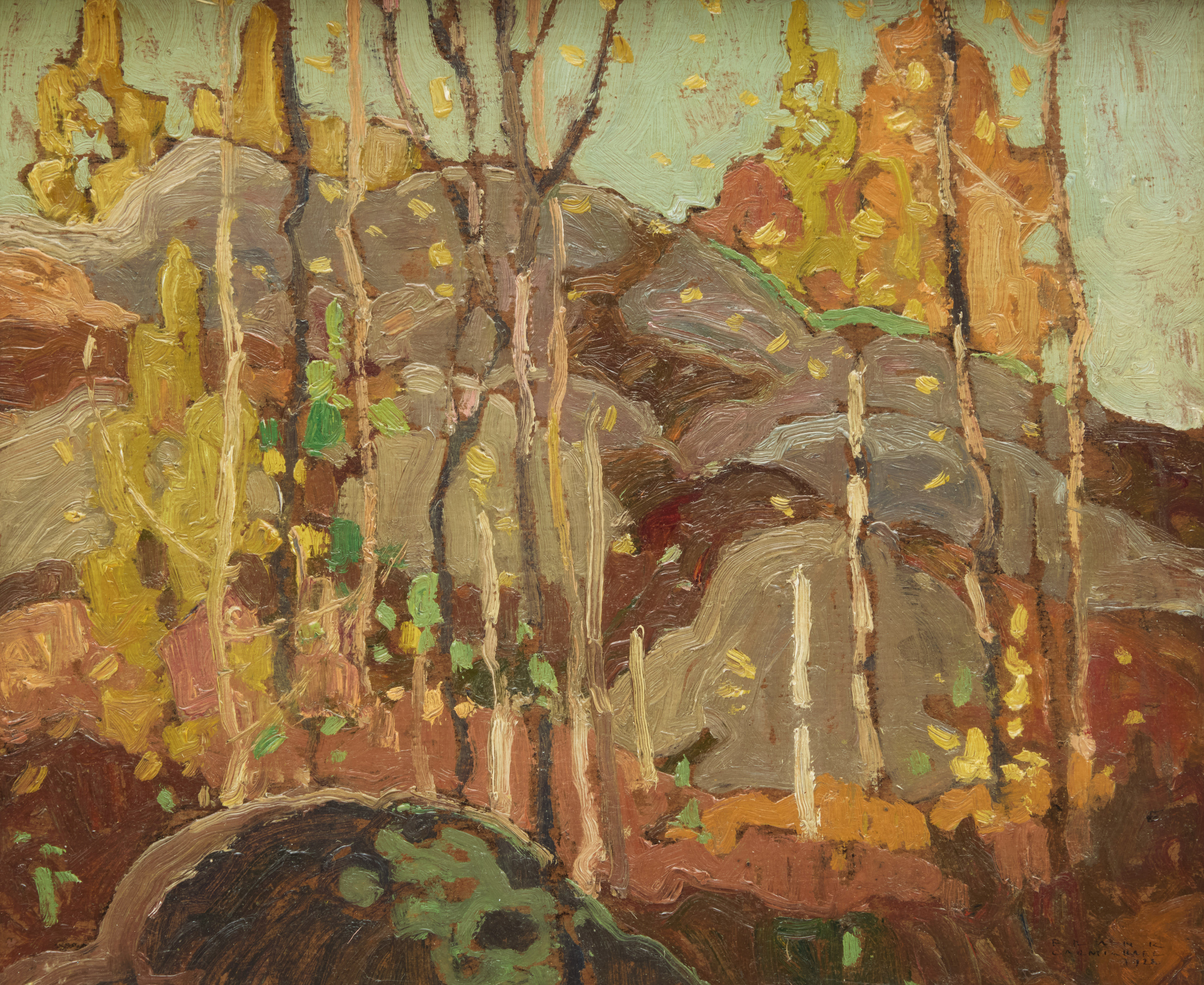
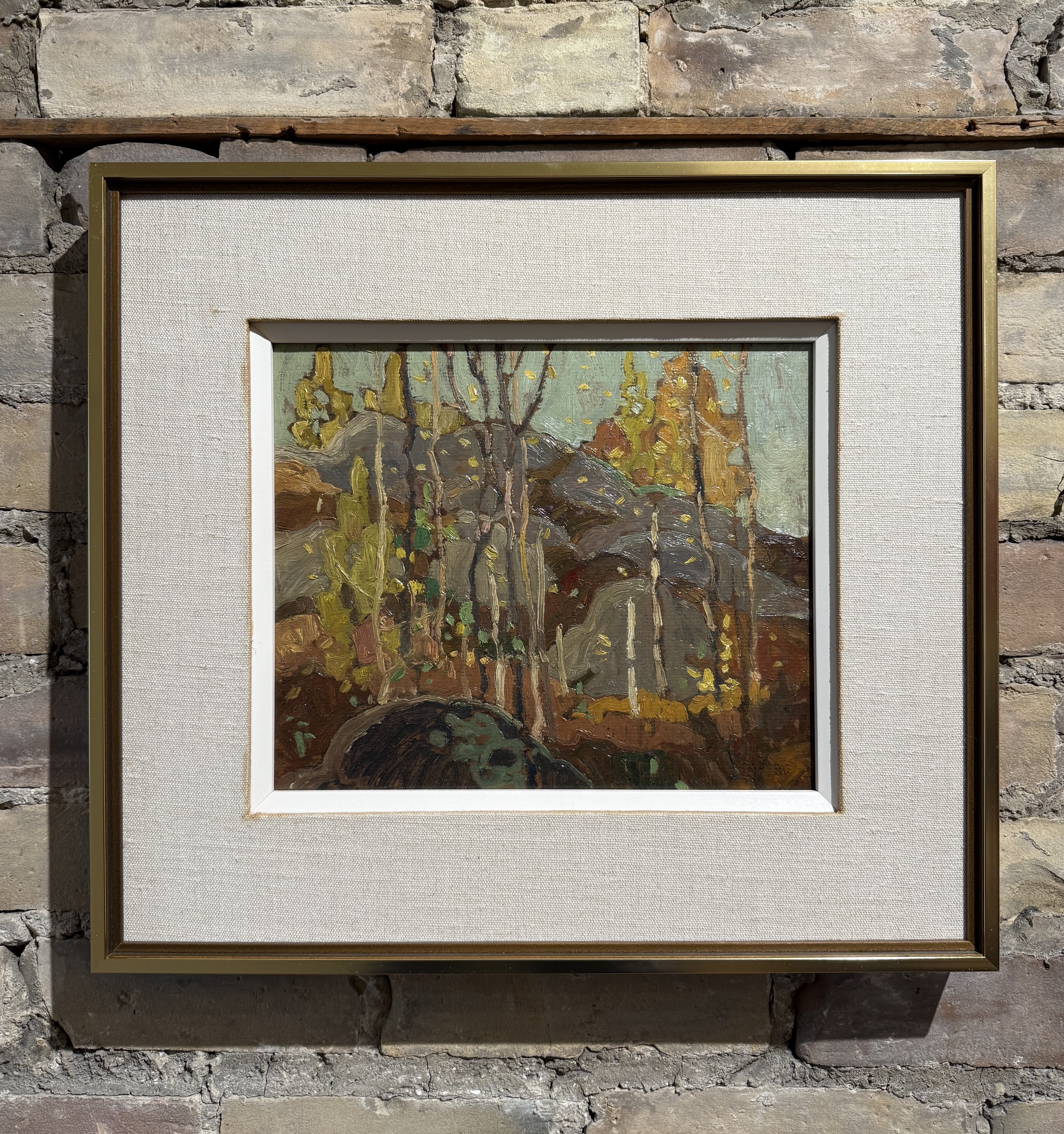
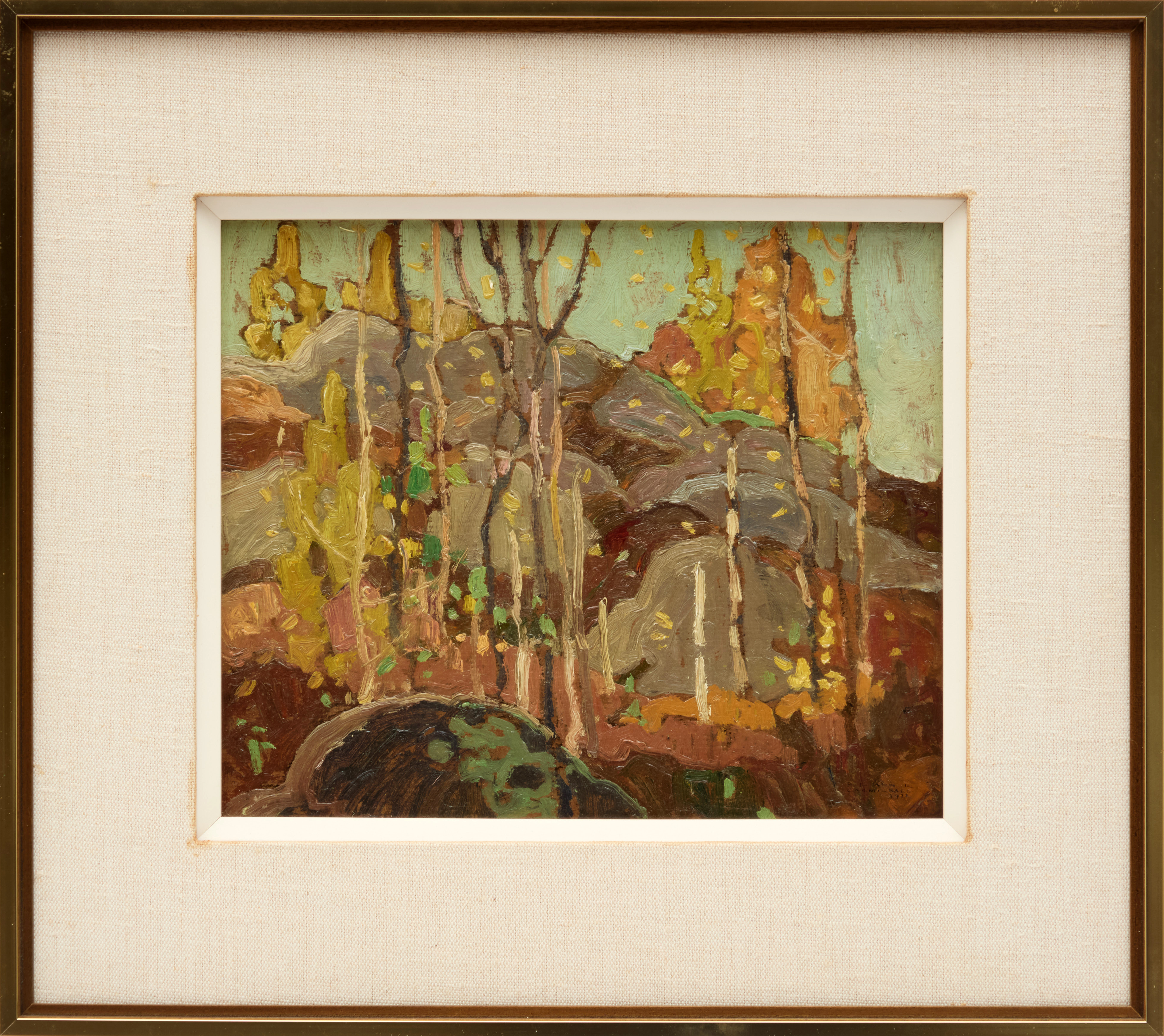
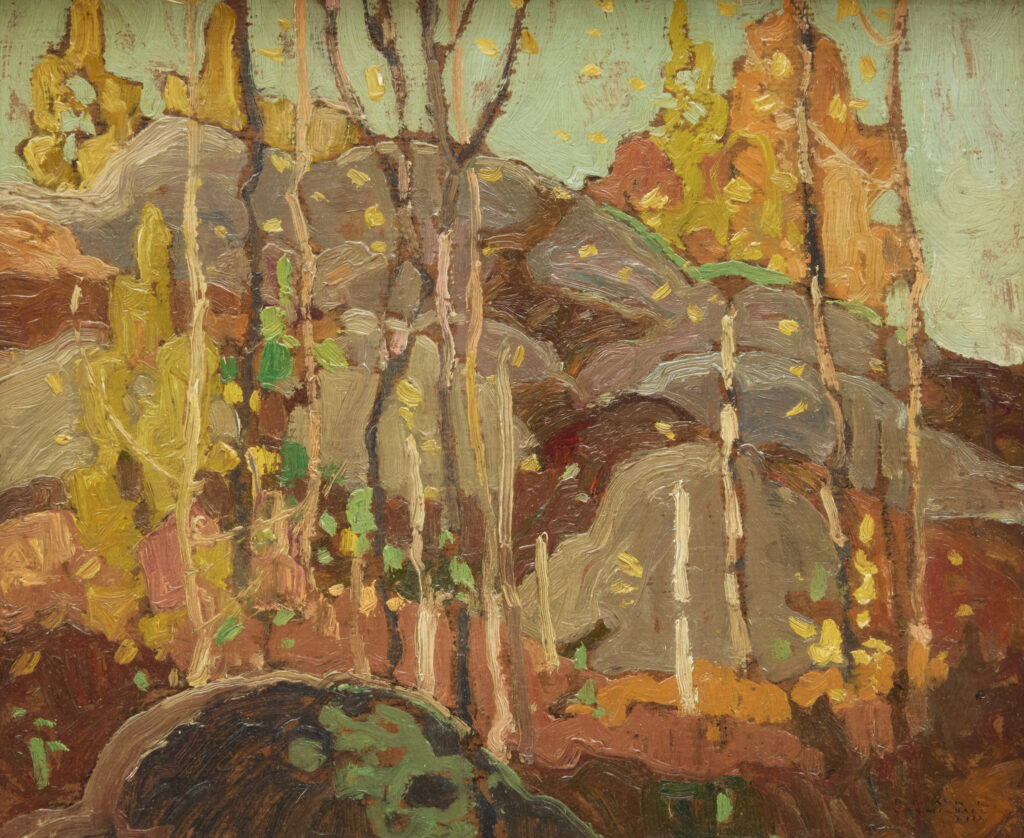
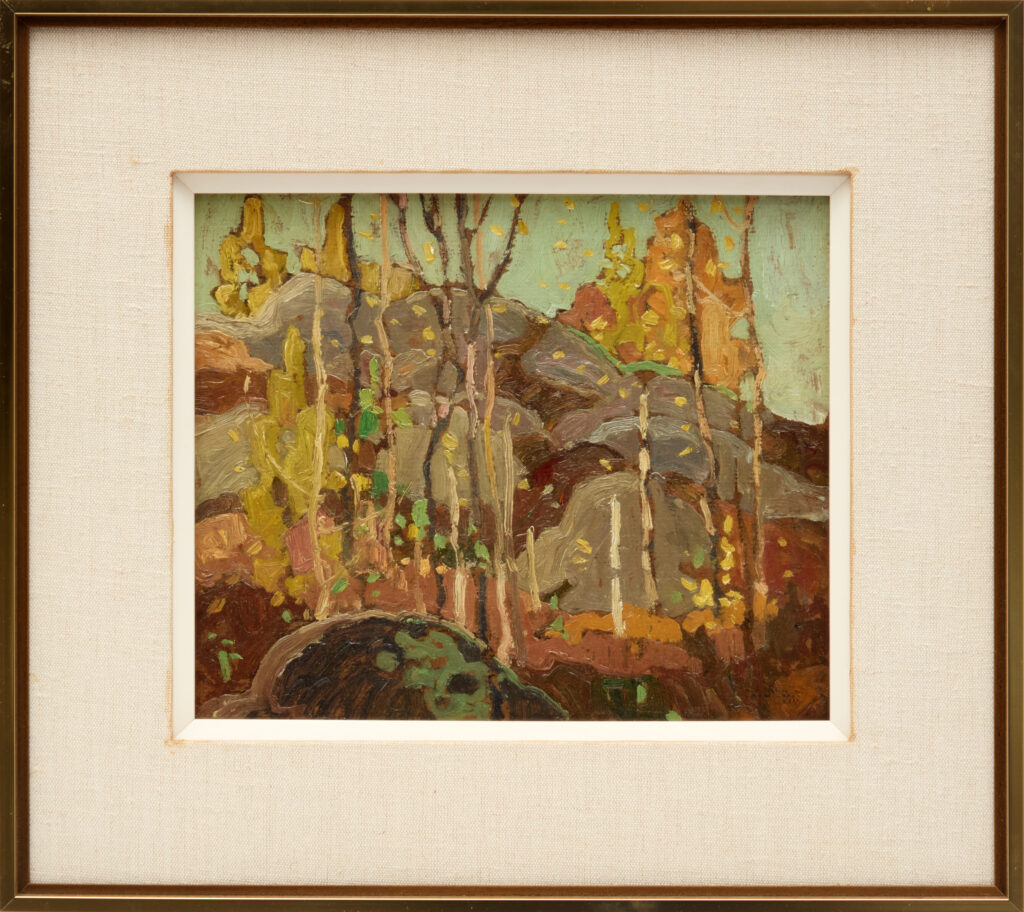
Falling Leaves, Autumn was painted in the ravine at the end of Cameron Avenue in Lansing, Ontario (now North York) where Franklin Carmichael bought a house in 1919. It exemplifies his commitment to Lawren Harris’ theory of simplification and Carmichael’s own distinct decorative sensibilities. Carmichael trained at the Ontario College of Art and Antwerp’s Academie Royale des Beaux-Arts, where he absorbed Art Nouveau, Arts & Crafts, and European modernist ideas. Upon returning to Canada in 1920, he balanced a commercial design career with weekend painting excursions, where he developed his distinctive approach to landscape painting that combined spiritual reverence with technical mastery. By 1922, when this painting was completed, the artist was actively integrating these influences into a distinctly Canadian landscape language, helping move the recently formed Group of Seven beyond Tom Thomson’s legacy toward a more formally refined modernism.
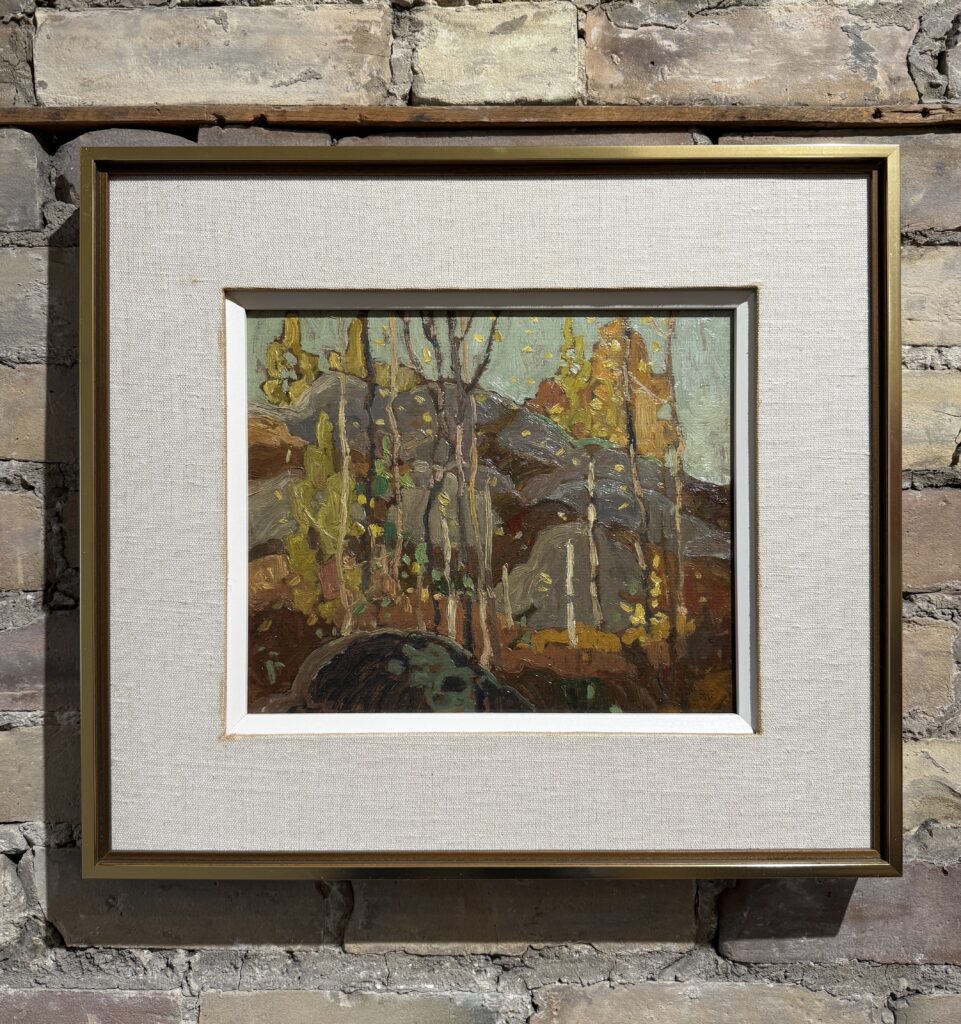
Falling Leaves, Autumn demonstrates Carmichael’s characteristic fascination with the “tangle” of tree forms and his development of flattened, tapestry-like compositions during this period. The composition is dense and rhythmic: slender, pale tree trunks arc and bend across the foreground, creating a lattice of verticals and diagonals that lead the eye inward. Carmichael’s palette of warm red and orange foliage is balanced by cool greens and a soft blue sky, signaling the transition from summer to fall.